We are a global platform connecting institutions, employers, students, job seekers, and recruitment partners.
Join Us Today:
Switzerland is one of the world’s most prosperous and stable nations, attracting thousands of international workers each year.
Famous for its high living standards, strong economy, and beautiful landscapes, Switzerland offers legal pathways for both skilled professionals and unskilled workers seeking employment across various industries.
This comprehensive guide explains everything you need to know about the Swiss Work Visa and Work Permit, including eligibility requirements, required documents, costs, procedures, and job opportunities for foreign workers.
1. A Strong, High-Income Economy
Switzerland has one of the highest GDP per capita rates in the world, with strong industries in banking, pharmaceuticals, manufacturing, IT, engineering, healthcare, and hospitality.
The demand for foreign labour remains consistent due to skill shortages and economic expansion.
2. Legal Access to the European Labour Market
While Switzerland is not part of the EU, it has bilateral agreements that allow qualified non-EU citizens to work legally under specific work permit categories.
3. Exceptional Living Standards
With world-class healthcare, clean cities, excellent infrastructure, and safe communities, Switzerland is among the most desirable destinations for professionals worldwide.
4. High Salaries and Employee Benefits
Swiss employers offer competitive salaries, extensive social security coverage, and excellent work–life balance conditions.
5. Path to Permanent Residence
Foreign workers can apply for Permanent Residence (Permit C) after 10 years of continuous legal stay, or earlier for some nationalities under bilateral agreements.
6. Transparent and Regulated Visa Process
The State Secretariat for Migration (SEM) and Cantonal Authorities ensure every application is processed fairly, making Switzerland’s system one of the most reliable in Europe.
A Swiss Work Permit authorises non-EU citizens to work legally for a specific employer and position in Switzerland.
It defines your employer, job title, and work location.
Work permits are issued jointly by the Cantonal Migration Offices and the State Secretariat for Migration (SEM).
Work permits are generally valid for 1 year and renewable as long as your employment continues.
|
Permit Type |
Purpose |
Validity |
Ideal For |
|---|---|---|---|
|
L Permit (Short-Term) |
For temporary work up to 12 months |
3–12 months |
Short-term or seasonal jobs |
|
B Permit (Initial Residence) |
For long-term employment contracts |
1 year (renewable) |
Full-time employees |
|
C Permit (Permanent Residence) |
For long-term residents after 10 years |
Unlimited |
Permanent workers |
|
G Permit (Cross-Border Commuters) |
For residents of neighbouring countries |
Ongoing |
EU border workers |
|
EU/EFTA Permit |
For EU citizens under free movement agreements |
Varies |
EU nationals |
The Type D Long-Stay Visa allows non-EU nationals to enter Switzerland for long-term employment.
It is directly tied to your approved work permit issued by the Cantonal Authorities.
To qualify for a Switzerland Work Visa, you must:
The Type D Visa is valid for up to 1 year and can be renewed with your work permit.
|
Stage |
Estimated Duration |
|---|---|
|
Work Permit Application |
30–60 working days |
|
Embassy Visa Processing |
20–40 working days |
|
Residence Registration |
2–4 weeks |
|
Total Duration |
60–120 working days |
|
Service |
Average Fee (CHF / €) |
Paid By |
|---|---|---|
|
Work Permit Application |
CHF 100–150 (€100–160) |
Employer |
|
Type D Visa |
CHF 80–100 (€85–110) |
Employee |
|
Residence Card |
CHF 65–100 (€70–110) |
Employee |
|
Embassy Service Fee |
CHF 20–30 (€25–35) |
Employee |
Additional expenses include insurance, document legalisation, and translations, if required.
|
Industry |
Common Roles |
Average Monthly Salary (€) |
Permit Type |
|---|---|---|---|
|
Engineering & Manufacturing |
Machine Operators, Technicians |
4,000–6,000 |
B Permit |
|
Banking & Finance |
Analysts, Accountants, Advisors |
5,000–9,000 |
B / C Permit |
|
Healthcare |
Nurses, Caregivers, Medical Technicians |
3,500–6,000 |
B Permit |
|
Construction |
Welders, Electricians, Plumbers |
3,000–4,500 |
L / B Permit |
|
IT & Software |
Developers, Analysts, Network Engineers |
4,000–8,000 |
EU Blue Card / B Permit |
|
Hospitality |
Chefs, Waiters, Cleaners |
2,800–4,000 |
L Permit |
|
Agriculture |
Seasonal Farm Workers |
2,500–3,200 |
L Permit |
Switzerland is one of the world’s most prosperous and high-standard countries, known for its exceptional salaries, strong economy, low taxes, advanced industries and outstanding quality of life. However, Switzerland’s immigration system—strict quotas, employer sponsorship rules, cantonal approvals, and detailed federal procedures—can be challenging without expert guidance.
Moving2Europe.eu provides structured, compliant, and end-to-end immigration support for skilled workers, families, and employers hiring global talent.
We assist with all major Swiss immigration pathways, including:
Support is provided for individuals and companies recruiting international professionals.
1. Work Permit & Employment Residence Support
We assist applicants with:
2. Documentation & Embassy/Consulate Support
Our services include:
3. Arrival & Legal Compliance in Switzerland
We guide applicants through:
We support families relocating to Switzerland with:
Your family’s move to Switzerland is coordinated professionally and lawfully.
Switzerland experiences labour demand in several key sectors, including:
We assist employers with:
We help companies bring international workers into Switzerland legally and efficiently.
For corporate leaders and high-level professionals, we offer:
Our digital platform provides:
Ideal for individuals and HR teams handling multiple cases.
We simplify Switzerland’s strict immigration rules and ensure a safe, legal pathway to work and live in the country.
Whether you are applying for employment, relocating with your family or hiring foreign workers, Moving2Europe.eu ensures a smooth, compliant and professionally managed Switzerland immigration experience from start to finish.
1. What are the main types of Swiss work permits?
Switzerland offers L Permits (short-term), B Permits (long-term), G Permits (cross-border), Seasonal Permits, and EU Blue Card–equivalent schemes for highly skilled workers.
2. What is the Switzerland B Permit?
A long-term residence and work authorisation is issued to foreign workers with ongoing employment contracts.
3. What documents are required for a Swiss work permit?
Passport, signed job contract, employer sponsorship, qualification proof, CV, medical insurance, police clearance, and financial records. Some require certified translations into German/French/Italian.
4. How long does the Swiss work permit process take?
Processing usually takes 6–12 weeks, depending on the canton, quota availability, and employer compliance.
5. Do I need a job offer to apply for a Swiss work visa?
Yes, Switzerland requires a confirmed employment contract for almost all work permits.
6. What is the Switzerland L Permit?
A short-term work and residence permit is issued for temporary assignments and is usually valid for up to 12 months.
7. Can I apply for a Swiss work permit from abroad?
Yes, your employer applies to Switzerland, and you complete visa formalities at the Swiss Embassy.
8. Can Swiss employers hire non-EU workers?
Yes, but they must prove labour shortages, meet salary standards, and obtain quota approval.
9. What is the minimum salary requirement in Switzerland?
Salaries must match Switzerland’s high wage standards and vary by canton, occupation, and skill level.
10. Can students work in Switzerland?
Yes, international students can work part-time (15 hours/week) and full-time during university breaks.
11. What are the shortage occupations in Switzerland?
Engineering, IT, healthcare, hospitality, construction, pharmaceuticals, and scientific research face strong demand.
12. Can I bring my family to Switzerland with my work permit?
Yes, B Permit holders can sponsor spouses and children under the dependent family reunification rules.
13. Do dependents have work rights in Switzerland?
Yes, dependents of B Permit holders can work after securing local approval and registration.
14. What is the Swiss Highly Skilled Worker Scheme?
A pathway similar to the EU Blue Card is offered to professionals with advanced qualifications and high salaries.
15. Can I change employers after receiving a Swiss permit?
Possible with permission. You must inform the authorities and update your permit conditions.
16. Do I need German, French, or Italian to work in Switzerland?
Not always. Many companies use English, especially in IT, finance, pharmaceuticals, and multinational sectors.
17. Is health insurance mandatory in Switzerland?
Yes, all residents—including foreign workers—must purchase Swiss health insurance within 3 months of arrival.
18. What is the Switzerland Seasonal Work Permit?
A temporary work permit for sectors like agriculture, tourism, and hospitality, valid for a few months.
19. Can seasonal workers apply for long-term residence?
No, seasonal work does not count towards permanent residency. Full-time employment is required.
20. How do I register my address in Switzerland?
You must register at the local commune (Gemeinde) within 14 days of arrival to receive your residence card.
21. Can I apply for permanent residence in Switzerland?
Yes, after 10 years of legal stay (sometimes earlier for certain nationalities) and fulfilling integration requirements.
22. Does Switzerland hire non-EU workers?
Yes, especially in engineering, scientific research, healthcare, IT, construction, and specialised industries.
23. What are the most in-demand jobs in Switzerland?
Engineers, nurses, IT developers, electricians, hotel staff, chefs, machine operators, and logistics workers.
24. Is it challenging to find a job in Switzerland?
Highly skilled workers find good opportunities; unskilled roles exist, but competition and requirements are high.
25. How long can I stay in Switzerland with a long-stay visa?
Typically, 90 days for entry, during which your residence permit is issued.
26. Can I renew my Swiss work permit?
Yes, renewals depend on employment status, canton approval, and annual quotas.
27. What is a Swiss Residence Permit Card?
A biometric card confirming your legal right to stay and work in Switzerland.
28. Do I need biometrics for Switzerland?
Yes, fingerprints and photos are taken during the residence permit appointment.
29. Can my employer submit my Swiss work permit?
Yes, employers handle most of the application process directly with the cantonal authorities.
30. Is Switzerland part of the Schengen Area?
Yes, Switzerland is a Schengen member, allowing visa-free travel within the Schengen Area.
31. Can I travel across Europe with a Swiss residence permit?
Yes, you may travel freely within the Schengen Area for up to 90 days in any 180 days.
32. What if my Swiss work permit is refused?
You can appeal or reapply. Common reasons include quotas, salary issues, or insufficient documentation.
33. Does Switzerland hire drivers and logistics workers?
Yes, transport, postal, and delivery companies regularly hire foreign truck and warehouse workers.
34. Is Switzerland attractive for skilled migration?
Yes, Switzerland offers high salaries, excellent living standards, and strong job stability.
35. Do documents need translation for Switzerland?
Yes, many documents must be translated into German, French, or Italian and may require legalisation.
36. Can unskilled workers find jobs in Switzerland?
Yes, but roles are competitive and often require employer sponsorship and strict document compliance.
37. What is the Switzerland work permit processing time?
On average, 6–12 weeks, but delays can occur due to quotas or canton workload.
38. Are healthcare workers in demand in Switzerland?
Yes, nurses, caregivers, and medical practitioners are in high demand across the healthcare system.
39. Do employers provide accommodation in Switzerland?
Some employers help arrange housing, especially in hospitality and remote areas, but accommodation is often costly.
40. What is the labour market test in Switzerland?
Employers must prove that no suitable Swiss/EU worker is available before hiring non-EU candidates.
41. Can I work while my Switzerland permit is being processed?
No, you must wait for official approval before starting work unless you have special authorisation.
42. Is there an age limit for Swiss work permits?
No strict age limit exists, but applicants must meet job, skill, and health requirements.
43. Can I convert a tourist visa to a work visa in Switzerland?
No, work visas must be applied for from your home country or place of legal residence.
44. Does Switzerland offer entry-level jobs for foreigners?
Yes, especially in hospitality, cleaning, agriculture, and food production, depending on employer needs.
45. Are biometrics required again after arrival?
Yes, biometrics are collected when your residence permit is issued.
46. Does Switzerland have a digital nomad visa?
No dedicated nomad visa, but some remote workers apply under business or self-employment categories.
47. What are the highest-paying sectors in Switzerland?
Pharmaceuticals, engineering, finance, IT, precision manufacturing, and medical professions.
48. Does Moving2Europe.eu assist with Swiss work permits?
Yes, we manage employer coordination, documentation, embassy procedures, and residence permit processing.
49. Can working in Switzerland lead to citizenship?
Yes, after long-term residence, integration, and language competence, citizenship may be possible.
50. How can I start my Switzerland work visa application?
Send your CV to Moving2Europe.eu, choose your job field, and we handle employer sponsorship and complete visa processing.
M2S Group Sp. z o.o. Offers complete guidance on Switzerland Work Visas, Work Permits, and Residence Applications.
Our experienced consultants assist with job placement, employer coordination, document verification, and embassy processing to ensure a fast, compliant process.
For trusted, transparent, and verified assistance in securing employment in Switzerland, contact M2S Group Sp. z o.o. Today, begin your successful European career.
Global clients share how M2S Group helped them secure careers, work permits, and visas in Europe...
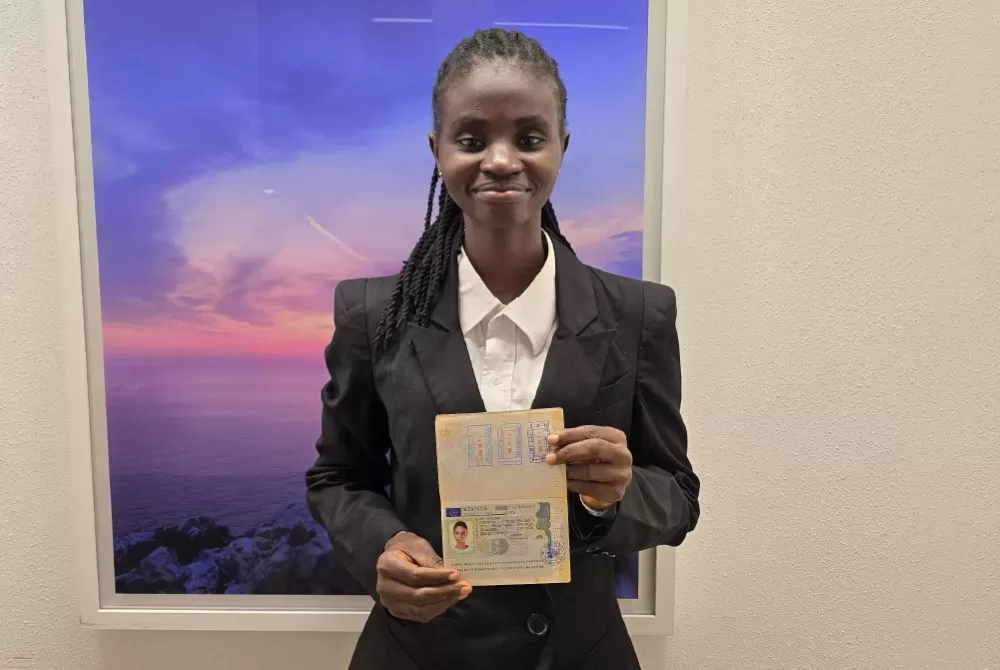
At M2S Group, we aim to help you become a true global citizen by providing exceptional support in your international career and immigration journey.
Read MoreWe connect institutions, employers, students, job seekers, and recruitment partners worldwide.


Are you recruiting skilled workers from the CIS, African, Asian regions, or other EU countries to work in Poland, Hungary, Lithuania, Slovakia, Estonia, Germany, and other EU nations? Partner with Moving2Europe.eu for efficient and reliable recruitment solutions.

Are you looking to work in Poland, Hungary, Lithuania, Slovakia, Estonia, Germany, or other EU countries? Could you let Moving2Europe. Can you connect with top employers and help with recruitment?

Do you recruit prospective students and workers eager to study or work in Poland, Hungary, Lithuania, Slovakia, Estonia, Germany, or other EU countries? Join Moving2Europe.eu as a trusted Recruitment Partner and grow your network globally.
We are here to help you explore opportunities to work and live in Europe. Our experts are ready to assist you with questions about job searching, obtaining a visa, recognising qualifications, and learning a European language. To learn more about contacting us, please click on one of the icons in the bar below.

No products in the cart.