Get Started with M2S Group!
We are a global platform connecting institutions, employers, students, job seekers, and recruitment partners.
Join Us Today:
Why Apply for a Turkey Work Visa?
- A transcontinental nation bridging Europe and Asia
- A work permit that doubles as a residence permit
- A streamlined online application via the e-Devlet system
- The Turquoise Card for highly qualified professionals and investors
- Strong demand in IT, tourism, engineering, and education
- Citizenship possible after five years of residence
- A large, dynamic economy centred on Istanbul
Turkey (Türkiye), a vibrant transcontinental nation bridging Europe and Asia, offers a large, dynamic economy and a unique strategic position. For foreign professionals, a key advantage is that the work permit doubles as a residence permit — one document for both. Issued by the Ministry of Labour and Social Security through a streamlined online system, it comes with strict employer criteria. With strong demand in IT, tourism, engineering, and education, the premium Turquoise Card for top talent, and citizenship possible after five years, Turkey is a distinctive destination.


Turkey Work Visa for Foreigners
Turkey, officially Türkiye, is a large transcontinental nation straddling Europe and Asia, with Istanbul as its dynamic economic heart. It offers a sizeable, diverse economy — strong in tourism, manufacturing, technology, and construction — and a unique position bridging two continents. For foreign professionals, a defining feature of the Turkish system is that the work permit also serves as a residence permit, combining both into a single document. Issued by the Ministry of Labour and Social Security, the permit comes with specific employer requirements. This guide explains everything you need to know — the permit types and how they fit together, eligibility, the employer criteria, the documents to prepare, the processing times, realistic salaries, the sectors that hire foreigners, the route to long-term residence and citizenship, and recent changes.
Why Apply for a Turkish Work Visa?
Turkey’s appeal lies in its opportunity, location, and streamlined permitting. Its economy is one of the largest in the region, with a vast tourism sector welcoming tens of millions of visitors a year, a growing technology scene in Istanbul, and strong manufacturing, engineering, and construction industries. Its position as a bridge between Europe and Asia makes it a strategic base for international business, connecting markets across two continents.
A major practical advantage is that the work permit doubles as a residence permit, eliminating the need for a separate bureaucratic track. The process is increasingly digital, run through the e-Devlet system, and the premium Turquoise Card offers highly qualified professionals and investors indefinite, settlement-like rights. With citizenship possible after five years of residence, Turkey is a distinctive and increasingly attractive destination for foreign workers. The combination of a large, dynamic economy, a single combined work-and-residence document, and a relatively quick path to citizenship sets it apart from most destinations.
There is a distinctive strategic and cultural dimension to working in Turkey. Istanbul, straddling the Bosphorus between Europe and Asia, is one of the world’s great cities and a major hub for finance, technology, trade, and tourism. At the same time, the country as a whole offers a rich history, a warm climate, a renowned cuisine, and a strategic location bridging continents and markets. Its growing technology scene, vast tourism industry, and strong manufacturing base generate genuine opportunities for foreign professionals. Combined with the practical convenience of the combined work-and-residence permit, the increasingly digital process, and the premium Turquoise Card for top talent, Turkey offers an unusual and increasingly attractive proposition for skilled workers willing to base themselves at the crossroads of Europe and Asia.
Benefits of Working in Turkey
Here is what makes Turkey appealing for foreign workers:
- A transcontinental nation bridging Europe and Asia
- A work permit that doubles as a residence permit
- A streamlined online application via the e-Devlet system
- The Turquoise Card for highly qualified professionals and investors
- Strong demand in IT, tourism, engineering, and education
- Family residence permits for Turquoise Card holders
- A large, dynamic economy and a strategic location
- Citizenship is possible after five years of residence
Turkey combines a large, dynamic economy with the convenience of a single combined work-and-residence document. The work permit, that doubles as a residence permit, removes an entire bureaucratic step, while the increasingly digital e-Devlet process streamlines applications. The premium Turquoise Card offers highly qualified professionals and investors indefinite, settlement-like rights with family residence permits, and the relatively short five-year path to citizenship rewards committed long-term workers. With strong demand in technology, tourism, engineering, and education, Turkey is a distinctive and increasingly attractive destination.
Types of Turkey Work Permits
Work permits are issued by the Ministry of Labour and Social Security and double as residence permits. Understanding the main types and the premium Turquoise Card is the key to choosing the right route.
Temporary Work Permit
The standard route, issued for up to one year at the time of the first application, is tied to a specific employer, workplace, and role. It can be extended — typically to two, then three years — as long as the employment continues. It is the route through which most foreign workers enter Turkey, with work and residence rights anchored o the sponsoring employer.
Permanent Work Permit
Available to foreigners who have held a long-term residence permit or a legal work permit for at least eight years, granting indefinite work authorisation. It rewards sustained, long-term residence and employment with permanent status, removing the need for repeated renewals.
Turquoise Card
Turkey’s premium talent route for highly qualified professionals, investors, scientists, and cultural or sporting figures. It grants indefinite work rights comparable to permanent residency, and the holder’s spouse and dependent children receive residence permits. It is the standout route for top talent and significant investors, offering settlement-like security from the outset.
Independent and Special Routes
An independent work permit is available to self-employed professionals, and special routes exist for technology-zone roles, intra-company transfers, and qualified foreign direct investment. These broaden the options beyond standard employment for entrepreneurs, transferees, and investors, widening access in particular circumstances.
Turkey Work Visa Eligibility Criteria
To be approved, both the employer and the applicant must meet Ministry criteria, generally including:
- A concrete job offer and sa igned contract with a Turkish employer
- An employer with paid-up capital of at least TRY 500,000
- The employer is meeting the five-to-one Turkish-to-foreign employee ratio
- A salary meeting the minimum multiple of the minimum wage for the role
- A valid passport and appropriate qualifications
- Diplomas translated, apostilled, and where needed recognised (denklik)
- The employer is up to date on tax and social security
A distinctive feature of the Turkish system is the weight placed on employer criteria: the company must generally have paid-up capital of at least TRY 500,000 and employ at least five Turkish nationals for each foreign worker (the five-to-one ratio). The salary multiples set the minimum gross pay by role — higher for senior managers, engineers, and specialists — and senior or specialist roles typically bypass the labour market test. Confirming that the employer meets the capital and ratio requirements, is up to date on taxes and social security, and that the salary meets the required multiple at the outset, is the foundation of a successful application.
Documents Required for aTurkishy Work Visa
The core documents you should prepare in advance include:
- Valid passport
- A signed employment contract
- A diploma or graduation certificate, translated and certified
- The employer’s trade registry gazette and financial statements
- A 16-digit reference number from the consular application (for offshore applicants)
- Passport-style photographs
- Qualification equivalency (denklikisre required
Supporting documents must be apostilled and translated into Turkish, and the work permit card itself functions as the residence permit. The employer’s trade registry gazette and financial statements are required to demonstrate capital and ratio compliance, which is central to the Turkish system. For offshore applicants, the 16-digit reference number from the consular application links the worker’s and employer’s filings. A complete file with apostilled, translated documents and, where required, qualification equivalency (denklik) enables the Ministry to evaluate the application smoothly within its usual timeframe.
How to Apply for a Turkish Work Visa: Step-by-Step Process
Most first-time applicants use the offshore (consular) route, linked to the employer’s online filing, and following the sequence is essential.
Step 1: Consular application. The worker books an appointment at a Turkish consulate, files a work visa application, and receives a 16-digit reference number.
Step 2: Employer filing. Within 10 working days, the Turkish employer logs in to the Ministry’s online system, submits the work permit application using the reference number, and uploads the ocuments.
Step 3: Ministry evaluation. The Ministry assesses the employer’s capital, ratio, and salary compliance, ass wellasd the applicant’s qualifications, typically within 30 days.
Step 4: Visa and entry. On approval, pay the fees, collect the work visa, and travel to Turkey.
Step 5: Activate. Within 15 days of arrival, complete registration and social security (SGK) activation; the permit serves as your residence permit, and you renew in good time before expiry.
Turkey Work Visa Processing Time
Processing is reasonably quick:
- Ministry evaluation: approximately 30 days (sometimes 30 to 90)
- The employer must file within 10 working days of the consular application
- Onshore applicants (with a valid residence permit) skip the consular step
- Missing documents must be supplied within a set window
Because the permit doubles as a residence permit, approval grants both work and residence rights in one step — a significant practical advantage that eliminates a separate process. The Ministry evaluation typically takes around 30 days, though it can extend to 30 to 90 days, and the employer’s tight 10-working-day filing window after the consular application is a key deadline to meet. Onshore applicants who already hold a valid residence permit skip the consular step. As always, a complete file with apostilled, translated documents and a compliant employer keeps the process on the quicker end of the range.
Turkey Work Visa Fees & Costs
Turkish fees are moderate:
- Work permit card (valuable paper) fee: around TRY 964
- One-year temporary work permit: roughly the equivalent of €119
- Permanent or independent work permit: higher
- Notarised translation and apostille: variable by document
Turkey uses the Turkish lira (TRY), which has been subject to significant inflation, so confirm current figures and salary levels before applying. The official permit fees are moderate, and for most applicants, the notable additional costs are the notarised translation and apostille of documents. Because the lira has experienced considerable inflation, both the fee figures and the salary multiples — which are benchmarked to the annually updated minimum wage — change over time, so it is especially important in Turkey to verify the current amounts before applying rather than relying on older figures.
Job Market in Turkey for Foreign Workers
Turkey’s demand spans IT, tourism, engineering, and education, with healthcare, finance, and construction adding further opportunities. Istanbul and Ankara anchor technology; the coast and Antalya drive tourism; and Istanbul, Bursa, and Izmir lead in manufacturing. Here is where the opportunities are:
| Sector | In-Demand Roles | Main Hiring Cities | Demand Level |
|---|---|---|---|
| Information Technology | Developers, IT Specialists, Data | Istanbul, Ankara | High |
| Tourism & Hospitality | Hotel Staff, Managers, Guides | Istanbul, Antalya, Coast | High |
| Engineering & Manufacturing | Engineers, Technicians | Istanbul, Bursa, Izmir | High |
| Education | English Teachers, Academics | Major Cities | Medium-High |
| Healthcare | Doctors, Specialists | Major Cities | Medium |
| Finance & Business | Analysts, Managers, Specialists | Istanbul | Medium |
| Construction | Engineers, Skilled Trades | Nationwide | Medium |
Information technology offers growing opportunities, concentrated in Istanbul and Ankara, where a developing technology scene generates demand for developers and IT specialists. Tourism and hospitality are vast sectors across Istanbul, Antalya, and the coast, welcoming tens of millions of visitors a year. At the same time, engineering and manufacturing are strong in Istanbul, Bursa, and Izmir. Education — particularly English teaching and academia — healthcare, finance in Istanbul, and construction add further opportunities. Because senior, specialist, and engineering roles meet the higher salary multiples that smooth the permit process and often bypass the labour market test, matching your profile to technology, engineering, or a senior role gives you the strongest position. Matching your skills to one of these sectors is the key to a realistic application.
Top In-Demand Jobs in Turkey for Foreigners
If you fit one of these roles, your prospects in Turkey improve:
- Software Developer and IT Specialist
- Hotel, Tourism, and Hospitality Professional
- Engineer and Manufacturing Technician
- English Teacher and Academic
- Doctor and Medical Specialist
- Finance and Business Specialist
- Senior Manager and Executive
- Skilled Construction Tradesperson
Technology and tourism offer growing opportunities, and senior, specialist, and engineering roles command higher salary multiples that streamline the permit process. If you are a software developer, an engineer, or a senior manager, your role is likely to meet the higher salary multiples and to bypass the labour market test, making the permit process smoother. English teachers, academics, and hospitality professionals also find steady demand. Matching your skills to one of these areas — ideally a senior or specialist role that clears the higher salary thresholds — gives you the best prospects in Turkey’s market, particularly with a compliant employer.
Average Salary of Workers in Turkey
Salaries are set as multiples of the minimum wage by role, and Turkey uses the Turkish lira (TRY). Here is a broad snapshot of monthly and annual gross salaries:
| Job Role | Monthly Salary (TRY) | Approx. Annual Salary (TRY) | Experience Level |
|---|---|---|---|
| Software Developer | 80,000 – 200,000 | 960,000 – 2,400,000 | Mid to Senior |
| Senior Developer / IT Specialist | 150,000 – 350,000 | 1,800,000 – 4,200,000 | Senior |
| Engineer / Architect | 88,000 – 200,000 | 1,056,000 – 2,400,000 | Mid Level |
| Senior Manager / Executive | 165,000 – 400,000 | 1,980,000 – 4,800,000 | Senior |
| Mid-Level Manager | 90,000 – 200,000 | 1,080,000 – 2,400,000 | Mid to Senior |
| Specialist / Teacher | 66,000 – 150,000 | 792,000 – 1,800,000 | All Levels |
| Doctor / Medical Specialist | 100,000 – 250,000 | 1,200,000 – 3,000,000 | All Levels |
| Finance / Business Specialist | 80,000 – 180,000 | 960,000 – 2,160,000 | Mid to Senior |
| Hospitality Manager | 66,000 – 130,000 | 792,000 – 1,560,000 | Mid to Senior |
| Skilled Tradesperson | 44,000 – 90,000 | 528,000 – 1,080,000 | Skilled Trade |
Note: Turkey uses the Turkish lira (TRY), which has experienced significant inflation, so figures should be checked against current rates. Minimum gross salaries are set as multiples of the minimum wage by role — for 2026, roughly TRY 66,000 per month for specialists up to TRY 165,000 per month for senior executives. Salaries are highest in senior management, engineering, and IT, mainly in Istanbul.
Taxes and Cost of Living in Turkey
Turkey applies a progressive personal income tax with several bands, alongside social security contributions administered through the SGK system, which both eemployersand eemployeespay. Tax is generally withheld at source for employees. A defining feature of the Turkish financial landscape is the significant inflation the lira has experienced in recent years, which affects wages, prices, and the value of savings; as a result, salary multiples are benchmarked against the annually updated minimum wage. Because of this, it is especially important to confirm the current tax bands, thresholds, and salary figures before relying on them, as they change more frequently than in more stable economies.
The cost of living, measured in lira, has risen substantially due to inflation. However, for those earning in foreign currency or at higher salary multiples, Turkey can still offer good value, particularly outside central Istanbul. Housing, dining, and services vary widely — Istanbul is the most expensive city, while Ankara, Izmir, and smaller cities are more affordable. The renowned cuisine, warm climate, and rich culture support an enjoyable lifestyle, and the country’s strategic location offers easy travel across two continents. For a well-paid professional in a senior, IT, or engineering role, net pay can support a comfortable lifestyle. However, the inflationary environment makes currency and cost planning more important than in most destinations. Always confirm current tax rates, thresholds, and costs before relying on them.
Dependent and Family Benefits for Turkey Permit Holders
Turkey allows family members of permit holders to obtain residence:
- Residence permits for spouses and dependent children
- Turquoise Card holders’ families receive residence permits
- Access to local services and schooling
- A shared path towards longer-term residence
- Family terms tied to the main applicant’s status
The Turquoise Card is especially family-friendly, granting the holder’s spouse and dependent children residence permits alongside the main applicant — a significant benefit reflecting the card’s premium status. For standard work-permit holders, spouses and dependent children can obtain residence permits based on the relationship, with access to local services and schooling. Because the family’s terms are tied to the main applicant’s status, keeping the permit valid and renewed is the key to maintaining the household’s position, and the family follows a shared path toward longer-term residence alongside the main applicant.
Pathway to Residence and Citizenship in Turkey
Turkey offers routes to long-term settlement and citizenship:
- Temporary work permits extend from two to three years with continued employment
- A long-term residence permit is generally available after eight continuous years
- The Turquoise Card grants indefinite, settlement-like work rights
- Citizenship is possible after five years of continuous residence with paid social security
- Continuous, compliant residence throughout is essential
The five-year path to citizenship, with completed social security contributions, is a notable feature of the Turkish system for committed long-term workers — a relatively short route compared with many countries. The path runs through successive extensions of the temporary work permit (to two, then three years), toward a long-term residence permit after eight continuous years, or directly through the Turquoise Card’s indefinite, settlement-like rights for top talent. For those who maintain continuous, compliant residence and complete their social security contributions, citizenship becomes possible after five years, making Turkey an attractive option for those seeking a relatively quick route to long-term settlement and eventual citizenship.
Latest Turkey Work Permit Rule Changes
Turkey continues to digitise and refine its system, so working from current rules matters. The key points:
- The work permit continues to double as a residence permit, simplifying status.
- Applications are processed through the e-Devlet system, with databases linked across the Ministry, social security, and revenue authorities.
- Employer criteria — paid-up capital, the five-to-one ratio, and salary multiples — are strictly enforced.
- The Turquoise Card remains the premium route for highly qualified talent and investors.
- Salary multiples are benchmarked to the annually updated minimum wage.
- Citizenship remains available after five years of continuous residence with paid social security.
The Ministry of Labour and Social Security administers these rules. Because the salary multiples are benchmarked to the annually updated minimum wage and the lira has experienced significant inflation, always confirm the current thresholds and figures before applying, and verify that the employer meets the strictly enforced capital, ratio, and salary requirements, as these are central to a successful application.
Common Reasons for a Turkey Work Visa Rejection
Most rejections happen for a recognisable set of reasons:
- The employer is not meeting the capital or five-to-one ratio requirements
- A salary below the required multiple for the role
- The employer has tax debts or unpaid social security premiums
- Market saturation for the role in that region or sector
- Missing the 10-day filing window or required documents
- Documents not apostilled or translated into Turkish
A good immigration consultant pre-audits the employer’s eligibility and the salary level and ensures a complete, correctly translated application before submission, which is where most problems are prevented. In Turkey, the most common barriers are employer-related: failing to meet the paid-up capital or five-to-one ratio requirements, or having tax debts or unpaid social security premiums. Confirming the employer’s capital, ratio, and tax compliance, ensuring the salary meets the required multiple, meeting the 10-day filing window, and preparing apostilled, translated documents are the surest ways to a clean approval.
How moving2europe.EU Can Help You
Turkey’s system is streamlined but strict on employer criteria, with a tight filing window. At moving2europe.eu, we help foreign nationals navigate the process from start to finish. Here is what we bring to the table:
- End-to-end guidance, from assessment to landing in Turkey
- Temporary, permanent, and Turquoise Card routes explained
- Document preparation, apostille, and translation into Turkish
- Checks on employer eligibility, capital, ratio, and salary multiples
- Coordination of the consular application and employer’s online filing
- Family residence handled alongside your application
- Guidance on the path to citizenship after five years
- Transparent advice and real human support throughout
Whether you are joining an Istanbul tech firm, a tourism group on the coast, or an engineering company, we can help you make the move to Turkey smoothly — with the employer’s eligibility verified, the consular and online filings coordinated, and an apostilled, translated application.
Start Your Journey to Turkey Today
Wherever you are in the process, moving2europe.eu is ready to help you take the next step toward working in Turkey. Choose the path that fits you:
- Job seekers — browse opportunities and begin your application on our Work in Europe page.
- Employers — hiring international talent for Turkey? Register as an employer to connect with skilled, pre-screened candidates.
- Recruitment partners — run a recruitment agency? Register as a recruitment partner to join our growing network.
Take the first step toward your new career in Turkey — get in touch with moving2europe.Eu today.
Turkey
Moving2Europe helps job seekers find rewarding employment opportunities across Turkey (Türkiye). We connect skilled and qualified workers with trusted Turkish employers in IT, tourism and hospitality, engineering and manufacturing, education, healthcare, and finance, supporting candidates from South Asia, East Asia, Sub-Saharan Africa, the Middle East, Latin America, Europe, and North America.
Our work placement services extend across Turkey, including Istanbul, Ankara, Izmir, Antalya, and Bursa.
We guide candidates through every stage of the journey — from the consular application and 16-digit reference number to the employer’s online filing, apostille and translation, the combined work-and-residence permit, and onboarding. Whether you’re a software developer, a hospitality professional, or an engineer, we help you secure stable, well-matched work that meets Turkish standards and supports your long-term goals.
Ready to Work in Turkey?
Please tell us your situation. Our team will explain the temporary, permanent, and Turquoise Card routes, prepare and translate your documents with apostille, check the employer’s eligibility, and coordinate the consular and online filings from start to finish — so you arrive in Turkey ready to start.
Conclusion
Turkey (Türkiye) is a distinctive transcontinental destination — a large, dynamic economy bridging Europe and Asia, centred on Istanbul. A key advantage for foreign workers is that the work permit doubles as a residence permit, issued through a streamlined online system, though employer criteria are strict. With strong demand in IT, tourism, engineering, and education, the premium Turquoise Card for top talent, and citizenship possible after five years, Turkey is well worth considering. Line up a qualifying role with an eligible employer, prepare your translated documents, and it becomes very achievable. And if you want a hand along the way, moving2europe.eu is here to help.
Looking for inspiration
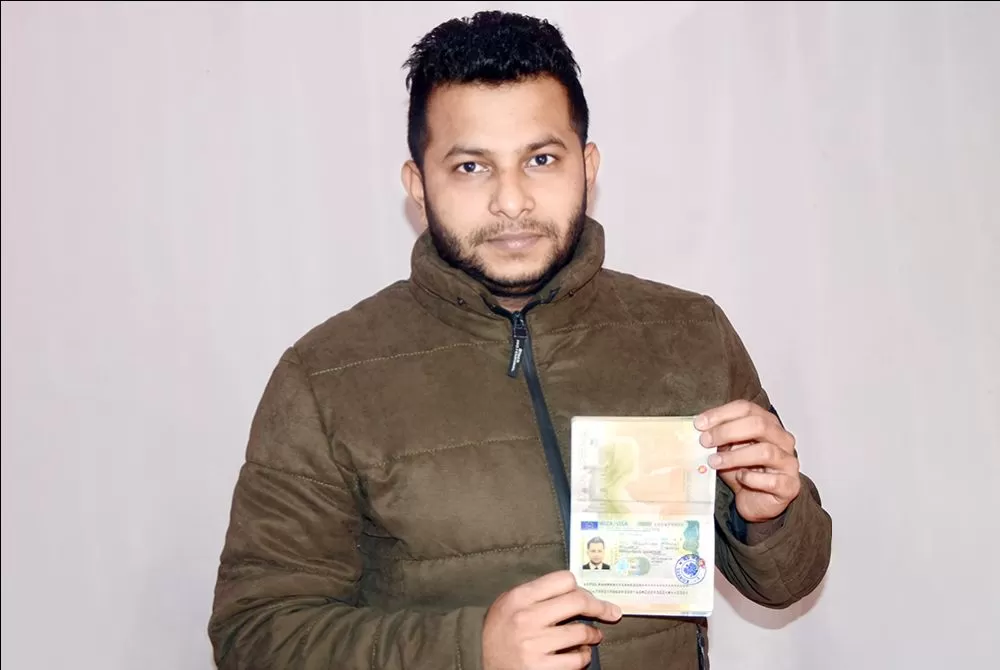
Global clients share how M2S Group helped them secure careers, work permits, and visas in Europe...


Why Choose M2S Group?
At M2S Group, we aim to help you become a true global citizen by providing exceptional support in your international career and immigration journey.
Read More



Get Started with M2S Group!
Our Platform
We connect institutions, employers, students, job seekers, and recruitment partners worldwide.

Employer
Are you recruiting skilled workers from the CIS, African, Asian regions, or other EU countries to work in Poland, Hungary, Lithuania, Slovakia, Estonia, Germany, and other EU nations? Partner with Moving2Europe.eu for efficient and reliable recruitment solutions.

Job seekers
Are you looking to work in Poland, Hungary, Lithuania, Slovakia, Estonia, Germany, or other EU countries? Could you let Moving2Europe. Can you connect with top employers and help with recruitment?

Recruitment Agency
Do you recruit prospective students and workers eager to study or work in Poland, Hungary, Lithuania, Slovakia, Estonia, Germany, or other EU countries? Join Moving2Europe.eu as a trusted Recruitment Partner and grow your network globally.
Do you have any questions?
We are here to help you explore opportunities to work and live in Europe. Our experts are ready to assist you with questions about job searching, obtaining a visa, recognising qualifications, and learning a European language. To learn more about contacting us, please click on one of the icons in the bar below.