Get Started with M2S Group!
We are a global platform connecting institutions, employers, students, job seekers, and recruitment partners.
Join Us Today:
Why Apply for a Malta Work Visa?
- English as an official language, easing work and daily life
- Four clear routes: Single Permit, KEI, SEI, and EU Blue Card
- Fast-track permits decided in as little as five working days
- A global iGaming, fintech, and financial-services hub
- Attractive tax incentives for highly qualified workers
- Strong demand in iGaming, finance, IT, and hospitality
- An EU, Schengen, and eurozone member in the Mediterranean
Malta is a sunny Mediterranean EU member with a major advantage for foreign workers: English is an official language, used across business and daily life. It offers four clear routes for non-EU professionals — the Single Permit, the fast-track Key Employee and Specialist Employee Initiatives, and the EU Blue Card — with some permits decided in as little as five working days. A global hub for iGaming, fintech, and financial services, with attractive tax incentives and a high quality of life, Malta is a compelling and accessible destination.


Malta Work Visa for Foreigners
Malta, a small archipelago in the heart of the Mediterranean, punches well above its weight as a destination for foreign workers. An EU, Schengen, and eurozone member, it has a thriving economy built on iGaming, financial services, fintech, tourism, and maritime, and a unique advantage among EU countries: English is an official language, spoken almost universally. For non-EU nationals, Malta offers several clear routes, from the common Single Permit to fast-track schemes and the EU Blue Card. With sunshine, safety, attractive tax incentives, and no language barrier, Malta is one of the most accessible and appealing EU destinations for skilled professionals. This guide explains everything you need to know — the permit types and which one suits you, the 2026 salary thresholds and eligibility, the documents to prepare, the fees, the processing times, realistic salaries, the sectors that actually hire foreigners, the route to long-term residence, and recent changes.
Why Apply for a Malta Work Visa?
Malta’s appeal is a rare blend of opportunity, language, and lifestyle. As a global iGaming and fintech hub with a strong financial services sector, it has steady demand for international talentt. Because English is an official language, foreign professionals can work and settle without a language barrier — a significant advantage over almost every other EU country. The government offers attractive tax incentives for highly qualified workers, and the Mediterranean climate, safety, and quality of life are major draws for those seeking both a career and a lifestyle.
Malta’s system is also flexible, with four distinct routes tailored to different profiles — the Single Permit for general employment, the Key Employee Initiative and Specialist Employee Initiative for skilled and senior roles, and the EU Blue Card for the highly qualified. Several of these are fast-tracked, with the KEI decided in as little as five working days, making Malta one of the more accessible and efficient EU destinations. For a skilled professional, the combination of English as a working language, multiple tailored routes, and fast processing is genuinely attractive.
There is a strong sector story too. Malta established itself early on as a European base for the online gaming industry, and iGaming remains a major employer of international talent, alongside a fast-growing fintech and blockchain scene and a long-established financial services sector. The island’s maritime and aviation registries are among the largest in the world, adding further demand for specialists. For professionals in these fields — or in technology, finance, and hospitality — Malta offers concentrated opportunity in a compact, English-speaking, sunny setting, with tax incentives that can make the financial package especially compelling.
Benefits of Working in Malta
Here is what makes Malta appealing for foreign workers:
- English as an official language
- Four clear routes: Single Permit, KEI, SEI, and EU Blue Card
- Fast-track permits are decided in as little as five working days
- A global iGaming, fintech, and financial-services hub
- Attractive tax incentives for highly qualified workers
- EU, Schengen, and eurozone membership
- A warm Mediterranean climate and high quality of life
- Large maritime and aviation registries with specialist demand
- A pathway to long-term EU residence
With multiple routes and English as a working language, Malta is one of the most straightforward EU countries for skilled foreign professionals to enter. The combination of fast-track schemes for skilled and senior roles, attractive tax incentives, and a no-language-barrier environment means that qualified candidates in iGaming, fintech, finance, and technology can often move quickly and settle comfortably — a rare and valuable combination within the EU.
Types of Malta Work Permits
Malta’s permits are administered by Identità (the Expatriates Unit) in coordination with Jobsplus for labour-market compliance. Choosing the right route from the outset shapes the threshold, the speed, and the process that apply to you.
Single Permit
The most common route is to combine work and residence in a single document under the EU Single Permit Directive. It is employer-driven, submitted online, and subject to a labour-market test, with no universal minimum salary. It is valid for one year initially and renewable for up to three years. It is the standard route for general employment that does not fit one of the fast-track schemes.
Key Employee Initiative (KEI)
A fast-track route for senior, managerial, or highly technical roles, decided in as little as five working days. It requires a minimum gross annual salary of €45,000. Formal qualification recognition is not mandatory; three years of relevant experience are generally accepted. It is valid for one year, renewable up to three years, and is ideal for senior hires who need to start quickly.
Specialist Employee Initiative (SEI)
A fast-track route for skilled professionals who do not meet the KEI threshold, processed within around 15 working days. It requires a minimum gross annual salary of €30,000 and an MQF Level 6+ qualification, or a lower qualification plus three years of relevant experience. It fills the gap between the standard Single Permit and the senior KEI, offering fast processing for mid-level specialists.
EU Blue Card
For highly qualified professionals with a university degree, a contract of at least six months, and a salary of at least 1.5 times the Maltese average (around €38,628 for 2026). It is valid for two years, offers EU mobility after 12 months, and requires health insurance with at least €100,000 of cover. It is the route of choice for those who may want EU-wide mobility later.
Malta Work Visa Eligibility Criteria
To be approved for a Maltese work and residence permit, you generally need to satisfy the following, each checked against your route:
- A confirmed job offer from a Malta-registered employer
- The salary and qualification level for your chosen route
- A positive labour-market test, where applicable
- A valid passport and a clean criminal record
- Proof of accommodation in Malta
- Health insurance (at least €100,000 of cover for the Blue Card)
- Completion of the mandatory Pre-Departure Course for first-time applicants
A significant new requirement is that, from January 2026, all third-country nationals aged 16 and above applying for their first work permit must complete a mandatory Pre-Departure Course and Suitability Check before the application is processed — an important step to factor into your timeline. Beyond that, the key variable is matching your salary and qualifications to the right route: the KEI for senior roles at €45,000, the SEI for specialists at €30,000, or the Blue Card for degree-holders above the 1.5-times-average threshold. Confirming the correct route at the outset is the foundation of a fast, successful application.
Documents Required for a Malta Work Visa
The core documents you should prepare in advance include:
- Valid passport
- A signed employment contract
- Proof of qualifications or relevant experience
- The employer’s company registration and compliance documents
- Proof of accommodation in Malta
- Health insurance certificate
- A clean criminal record certificate
Documents are submitted online through Identità’s portal by the employer, and a job advertisement is generally required for the labour market test, where applicable. Because English is an official language, much documentation is already in English, easing the process compared with most EU countries. First-time applicants should also factor in the mandatory Pre-Departure Course. A complete file submitted through Identità’s portal, with the correct salary and evidence of qualifications for the chosen route, allows the application to proceed quickly — especially under the fast-track KEI and SEI schemes.
How to Apply for a Malta Work Visa: Step-by-Step Process
The process is employer-driven and runs through Identità, and following the sequence keeps it efficient.
Step 1: Confirm the route. Decide between the Single Permit, KEI, SEI, or EU Blue Card based on your salary and qualifications.
Step 2: Pre-Departure Course. First-time applicants complete the mandatory Pre-Departure Course and Suitability Check.
Step 3: Employer applies. The employer advertises the role as required and submits the application online through Identità, with your endorsement.
Step 4: Visa and entry. Visa-required nationals obtain a visa through Identità’s Central Visa Unit and travel to Malta.
Step 5: Collect your e-Residence card. After approval, permit your single permit or residence card, which serves as both work and residence authorisation, then begin work.
Malta Work Visa Processing Time
Processing varies by route:
- Key Employee Initiative: as little as five working days
- Specialist Employee Initiative: around 15 working days
- EU Blue Card: up to Permit days
- Single Permit: up to four months under the Single Permit Regulations
The fast-track KEI and SEI are major advantages for skilled and senior hires, with the KEI decided in as little as five working days — among the fastest anywhere in the EU. The Single Permit takes longer due to the full labour market process, and the Blue Card has a statutory 90-day maximum. For first-time applicants, the mandatory Pre-Departure Course should be completed in good time, as it precedes processing. Choosing the fast-track route when you qualify nd submitting a complete file is the surest way to a quick outcome.
Malta Work Visa Fees & Costs
Maltese fees are moderate by EU standards:
- EU Blue Card: €300
- Single Permit and fast-track schemes: per the applicable schedule
- Health insurance: variable (at least €100,000 cover for the Blue Card)
- Pre-Departure Course, translation, and document costs: variable
Budget also for accommodation, flights, and initial living costs, which are moderate by EU standards. The official permit fees are reasonable, and for most applicants, the notable additional costs are the qualifying health insurance (especially the €100,000 minimum cover for the Blue Card), the Pre-Departure Course, and any document preparation. Set against Malta’s tax incentives for highly qualified workers and a moderate cost of living, the overall cost of establishing yourself on the island is manageable, particularly for well-paid roles in iGaming and finance.
Job Market in Malta for Foreign Workers
Malta’s demand is led by iGaming, financial services, IT, and hospitality, with healthcare, maritime, aviation, and construction adding further opportunities. The iGaming and finance clusters around St Julian’s, Sliema, and Valletta drive most skilled hiring. Here is where the opportunities are:
| Sector | In-Demand Roles | Main Hiring Areas | Demand Level |
|---|---|---|---|
| iGaming & Online Gaming | Developers, Operations, Compliance, Support | St Julian’s, Sliema | Very High |
| Financial Services & Fintech | Analysts, Compliance, Accountants | Valletta, Sliema | Very High |
| Information Technology | Software Developers, DevOps, Data Specialists | Nationwide | High |
| Tourism & Hospitality | Hotel Staff, Chefs, Resort Workers | Nationwide | Very High (Seasonal) |
| Healthcare | Nurses, Doctors, Carers | Nationwide | High |
| Maritime & Aviation | Specialists, Engineers, Administrators | Nationwide | Medium-High |
| Construction | Skilled Trades, Engineers | Nationwide | High |
iGaming is Malta’s standout sector, concentrated around St Julian’s and Sliema and employing large numbers of international developers, operations, and compliance staff, while financial services and fintech cluster around Valletta and Sliema. IT demand spans the economy, and tourism and hospitality generate high-volume seasonal opportunities. Malta’s large maritime and aviation registries add specialist roles, and construction is busy nationwide. Because English is the working language across all these sectors, foreign professionals can integrate immediately. Matching your profile to iGaming, finance, or technology — ideally via a fast-track route — gives you both strong demand and quick processing.
Top In-Demand Jobs in Malta for Foreigners
If you fit one of these roles, your chances of getting a Maltese work permit go up significantly:
- iGaming Developer, Operations, and Compliance Specialist
- Financial Analyst and Compliance Officer
- Software Developer and DevOps Engineer
- Accountant and Auditor
- Hotel, Restaurant, and Resort Staff
- Nurse, Doctor, and Carer
- Maritime and Aviation Specialist
- Skilled Construction Tradesperson
iGaming and financial services drive the most demand for skilled professionals, while tourism and hospitality offer high-volume seasonal opportunities. If you combine relevant experience with skills in online gaming, fintech, compliance, or software, you are particularly well placed, because these are precisely the areas where Malta’s economy creates the strongest demand for international talent — and where the fast-track KEI and SEI schemes make hiring quick and efficient for employers.
Average Salary of Workers in Malta
Salaries are moderate but tax-friendly, and Malta uses the euro. Here is a realistic snapshot of monthly and annual gross salaries:
| Job Role | Monthly Salary (EUR) | Approx. Annual Salary (EUR) | Experience Level |
|---|---|---|---|
| Software Developer | 2,500 – 4,500 | 30,000 – 54,000 | Mid to Senior |
| Senior Developer / Architect | 3,500 – 5,500 | 42,000 – 66,000 | Senior |
| iGaming Specialist | 2,500 – 4,500 | 30,000 – 54,000 | Mid to Senior |
| Financial Services Specialist | 2,800 – 5,000 | 33,600 – 60,000 | Mid to Senior |
| Compliance Officer | 2,800 – 5,000 | 33,600 – 60,000 | Mid to Senior |
| Accountant | 2,000 – 3,500 | 24,000 – 42,000 | Mid Level |
| Engineer | 2,200 – 3,800 | 26,400 – 45,600 | Mid Level |
| Doctor | 3,500 – 6,000 | 42,000 – 72,000 | All Levels |
| Nurse | 1,800 – 2,800 | 21,600 – 33,600 | All Levels |
| Hospitality Manager | 1,800 – 3,000 | 21,600 – 36,000 | Mid to Senior |
| Hotel / Restaurant Staff | 1,200 – 1,800 | 14,400 – 21,600 | Entry to Mid |
Note: Malta uses the euro. The EU Blue Card threshold is around €38,628 per year for 2026 (1.5 times the average), the KEI requires €45,000, and the SEI €30,000. Salaries are highest in iGaming, fintech, and finance, and Malta’s tax incentives for highly qualified workers can significantly boost take-home pay relative to the headline figures.
Taxes and Cost of Living in Malta
Malta operates a progressive personal income tax, but it is particularly known for favourable tax schemes aimed at attracting talent. The Highly Qualified Persons rules can offer a flat, reduced rate on employment income for qualifying senior professionals in sectors such as financial services, iGaming, and aviation, substantially increasing take-home pay for those who qualify. Malta also has a tax-refund system for certain shareholders and a remittance-based regime for some non-domiciled residents. Because these incentives are rule-bound and sector-specific, it is worth confirming whether you qualify, as they can transform your net position.
The cost of living is moderate by EU standards, though it has risen in recent years, with housing in the most popular areas — Sliema, St Julian’s, and Valletta — being the most expensive. Elsewhere on the islands, rents are more affordable, and groceries, dining, and transport are reasonable. The Mediterranean lifestyle — sunshine, sea, and an outdoor culture — comes at a moderate price. For a well-paid professional in iGaming or finance, particularly one benefiting from the Highly Qualified Persons incentive, the combination of competitive salaries,a l a e ffective ta rtax rated a moderate cost of liviliving yieldsong taketake-home payngside an excellent quality of life. Always confirm current tax rates, the Highly Qualified Persons conditions, and thresholds before relying on them.
Dependent Visa Benefits for Malta Work Permit Holders
Malta allows family reunification for work-permit and EU Blue Card holders:
- Residence permits for spouses and dependent children
- Fast family reunification for Blue Card holders, within 30 days
- Family applications can be submitted with the main applicant for the Blue Card
- Access to education and public services
- A shared pathway to long-term residence
For most routes, family reunification is available after a qualifying period. At the same time, the EU Blue Card and SEI offer faster, more flexible family options — with Blue Card family reunification possible within 30 days and family applications that can be submitted alongside the main applicant. Combined with English-language schooling, access to public services, and a safe Mediterranean environment, the family provisions make relocating a household to Malta straightforward, particularly for Blue Card holders who benefit from the fastest and most flexible options.
Pathway to Permanent Residency (PR) in Malta
Malta offers a clear route to long-term settlement:
- Work, fast-track, and EU Blue Card permits are renewed in line with employment
- After five years of continuous legal residence, you can apply for EU long-term resident status
- EU Blue Card holders benefit from cumulated time across EU countries, with at least two years in Malta
- Continuous, compliant residence is essential
- English as an official language eases long-term integration
Maintaining valid status and continuous residence is key to qualifying for long-term settlement. A notable advantage for EU Blue Card holders is that time spent in other EU countries can be cumulated toward the five-year requirement, provided at least two years are in Malta. The fact that English is an official language makes long-term integration considerably easier than in most EU countries, removing the language hurdle that often complicates settlement elsewhere. For most workers, steady renewal alongside continued employment leads naturally to EU long-term resident status at the five-year mark.
Latest Malta Work Permit Rule Changes
Malta recently updated its framework, so working under the current rules matters. The key points:
- From January 2026, all third-country nationals aged 16 and above will be required to complete a Pre-Departure Course and Suitability Check for their first work permit.
- The Specialist Employee Initiative threshold is €30,000 per year, and the KEI is €45,000.
- The EU Blue Card threshold for 2026 is around €38,628 (1.5 times the average gross salary).
- The KEI is decided in as little as five working days, and the SEI in around 15 working days.
- Identità and Jobsplus continue to administer and update labour-market rules.
- Health insurance with at least €100,000 of cover is required for the Blue Card.
Identità administers these rules in coordination with Jobsplus. Because the Pre-Departure Course requirement is new for 2026 and the thresholds are updated periodically, always confirm the current thresholds and requirements before applying. Ensure first-time applicants complete the Pre-Departure Course in good time, as it precedes processing.
Common Reasons for a Malta Work Visa Rejection
Most rejections happen for a recognisable set of reasons:
- A salary below the threshold for the chosen route
- A failed labour-market test for the Single Permit
- Not completing the mandatory Pre-Departure Course
- Insufficient or unrecognised qualifications
- Incomplete employer documentation
- Inadequate health insurance or proof of accommodation
A good immigration consultant matches you with the right route and ensures a complete, compliant application before submission, where most problems are prevented. In Malta, a new and common pitfall is failing to complete the mandatory Pre-Departure Course, which is required from January 2026, alongside salary or qualification mismatches for the chosen route. Confirming the correct route and threshold, completing the Pre-Departure Course, and ensuring adequate health insurance and accommodation are the surest ways to a clean, fast approval.
How moving2europe.EU Can Help You
Malta’s four routes and English-speaking environment make it accessible, but choosing the right scheme and meeting the new requirements require care. At moving2europe.eu, we help foreign nationals navigate the process from start to finish. Here is what we bring to the table:
- End-to-end guidance, from route selection to landing in Malta
- The right route identified — Single Permit, KEI, SEI, or EU Blue Card
- Pre-Departure Course guidance and full document preparation
- Liaison with Maltese employers in iGaming, finance, IT, and hospitality
- Identità applications and visas managed end to end
- Family reunification is handled alongside your application
- Guidance on the Highly Qualified Persons tax incentives
- Transparent fees and real human support throughout
Whether you are heading for an iGaming firm, a financial-services role, or a hospitality job, we can help you make the move to Malta smoothly — with the right route, the Pre-Departure Course completed, and a complete, compliant application.
Start Your Journey to Malta Today
Wherever you are in the process, moving2europe.eu is ready to help you take the next step toward working in Malta. Choose the path that fits you:
- Job seekers — browse opportunities and begin your application on our Work in Europe page.
- Employers — hiring international talent for Malta? Register as an employer to connect with skilled, pre-screened candidates.
- Recruitment partners — run a recruitment agency? Register as a recruitment partner to join our growing network.
Take the first step toward your new career in Malta — get in touch with moving2europe.Eu today.
Malta
Moving2Europe helps job seekers find rewarding employment opportunities across Malta. We connect skilled, semi-skilled, and qualified workers with trusted Maltese employers in iGaming, financial services, IT, hospitality, and healthcare, supporting candidates from South Asia, East Asia, Sub-Saharan Africa, the Middle East, Latin America, Europe, and North America.
Our work placement services extend across Malta, including Valletta, Sliema, St Julian’s, and Birkirkara.
We guide candidates through every stage of the journey — from the Single Permit, KEI, SEI, or EU Blue Card and the Pre-Departure Course to document preparation, the Identità application, visa, and onboarding. Whether you’re an iGaming specialist, a finance professional, or a hospitality worker, we help you secure stable, well-matched work that meets Maltese standards and supports your long-term goals.
Ready to Work in Malta?
Please tell us your situation. Our team will identify the right route — Single Permit, KEI, SEI, or EU Blue Card — guide you through the Pre-Departure Course, prepare your documents, and coordinate the Identità application and visa from start to finish — so you arrive in Malta ready to start.
Conclusion
Malta is one of the most accessible and rewarding EU destinations for foreign workers — an English-speaking, Mediterranean, eurozone member with a thriving iGaming, fintech, and financial services economy, attractive tax incentives, and four clear routes to choose from, several of which are fast-tracked. Line up the right job, choose the right route, complete the Pre-Departure Course, and Malta becomes very achievable. And if you want a hand along the way, moving2europe.eu is here to help.
Looking for inspiration
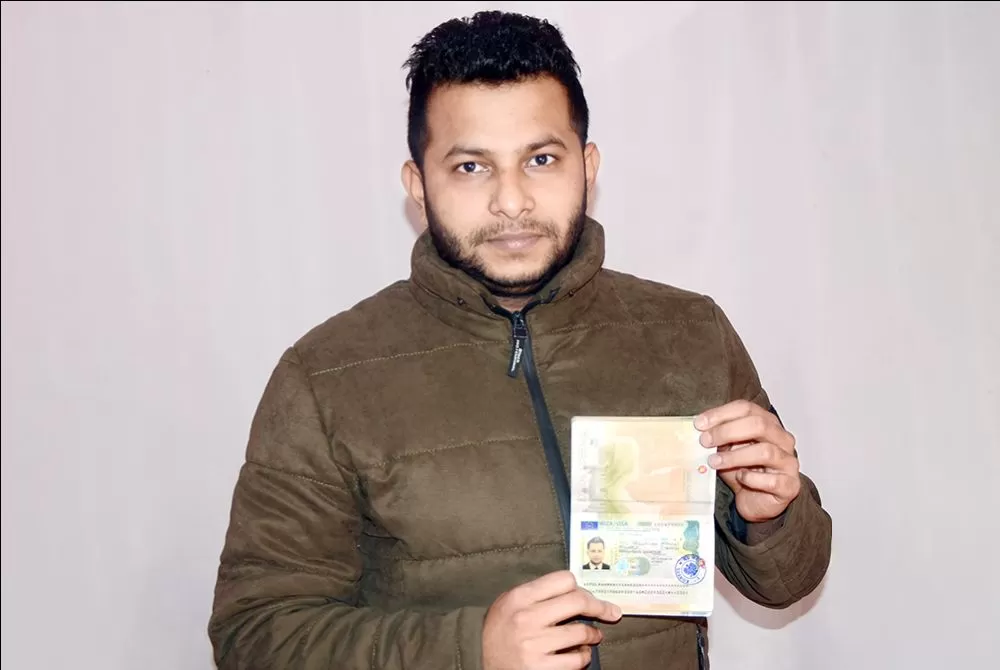
Global clients share how M2S Group helped them secure careers, work permits, and visas in Europe...


Why Choose M2S Group?
At M2S Group, we aim to help you become a true global citizen by providing exceptional support in your international career and immigration journey.
Read More



Get Started with M2S Group!
Our Platform
We connect institutions, employers, students, job seekers, and recruitment partners worldwide.

Employer
Are you recruiting skilled workers from the CIS, African, Asian regions, or other EU countries to work in Poland, Hungary, Lithuania, Slovakia, Estonia, Germany, and other EU nations? Partner with Moving2Europe.eu for efficient and reliable recruitment solutions.

Job seekers
Are you looking to work in Poland, Hungary, Lithuania, Slovakia, Estonia, Germany, or other EU countries? Could you let Moving2Europe. Can you connect with top employers and help with recruitment?

Recruitment Agency
Do you recruit prospective students and workers eager to study or work in Poland, Hungary, Lithuania, Slovakia, Estonia, Germany, or other EU countries? Join Moving2Europe.eu as a trusted Recruitment Partner and grow your network globally.
Do you have any questions?
We are here to help you explore opportunities to work and live in Europe. Our experts are ready to assist you with questions about job searching, obtaining a visa, recognising qualifications, and learning a European language. To learn more about contacting us, please click on one of the icons in the bar below.