19th Oct 2026
Updated on: 19th Oct 2026
How Seasonal Work Permits Work in Serbia
Serbia does not issue a stand-alone document called a seasonal work permit. What it has instead is a dedicated seasonal route for one group of sectors and the ordinary work authorisation rules for everything else. If you want to pick fruit, harvest crops, prune orchards or do similar work in agriculture, forestry or fishing, the employer can engage you under the simplified seasonal work regime (sezonski poslovi) for up to 120 working days in a calendar year, and a foreigner who needs a visa applies for a visa D issued for seasonal work. Seasonal workers on that route do not need the unified permit for residence and work (jedinstvena dozvola). If your seasonal job is in a hotel, a beach bar, a ski resort or on a building site, there is no special seasonal permit: you need the normal authorisation to work, which usually means a visa D for employment for shorter engagements or a unified permit for longer ones, with the National Employment Service (Nacionalna služba za zapošljavanje, NSZ) involved on the labour market side. This guide explains how each route for a seasonal work permit in Serbia works and where its limits lie.
The short answer on a seasonal work permit in Serbia
People searching for a seasonal work permit in Serbia are usually asking one practical question: can I come for a few months, work, and go home again without going through the full residence procedure? The answer depends almost entirely on the sector.
- Agriculture, forestry and fishing: a simplified regime exists. The Government's online service for foreigners describes a visa D for seasonal work and states that foreigners engaged on this basis can work without obtaining the unified permit for residence and work. Engagement is capped at 120 working days per calendar year with one employer.
- Tourism, hospitality, construction and other sectors: no simplified seasonal regime applies to foreign workers under the official guidance reviewed for this article. Seasonal jobs in these sectors are treated like any other job, so the worker needs a visa D for employment, a unified permit, or another legal basis that carries a right to work.
- Visa-free stays: being allowed to enter Serbia without a visa is not the same as being allowed to work. Short visits only cover the narrow list of activities that the official guidance says may be carried out for up to 90 days without a work permit, and ordinary seasonal jobs are not on that list.
Serbia is not in the EU, so EU seasonal worker rules do not apply.
Serbia is a candidate country for membership of the European Union, not a member state. EU directives and regulations, including the EU rules on seasonal workers from outside the Union, do not apply in Serbia directly. Serbian seasonal work is governed by Serbian legislation: the Law on Simplified Work Engagement on Seasonal Jobs in Certain Activities (Zakon o pojednostavljenom radnom angažovanju na sezonskim poslovima u određenim delatnostima), the Law on Foreigners (Zakon o strancima), the Law on Employment of Foreigners (Zakon o zapošljavanju stranaca) and the Labour Law (Zakon o radu).
This matters for two reasons. First, a seasonal permit or visa issued by an EU country gives no right to work in Serbia. Second, EU citizens do not have automatic free access to the Serbian labour market. A French, Polish or Romanian national who wants to do seasonal work in Serbia goes through the same Serbian procedures as anyone else, apart from any visa exemption their nationality enjoys for entry.
Two legal routes for seasonal work in Serbia
It helps to think of seasonal work in Serbia as two separate tracks that only share a name in everyday speech.
Route one, the simplified seasonal regime
This is the route that most people mean when they talk about seasonal workers in Serbia. It was designed for farms and agricultural businesses that need large numbers of workers for short peaks, such as planting and harvest. It works through a lighter procedure built around electronic registration and deregistration of each worker with the Tax Administration (Poreska uprava). For foreign nationals, it is paired with a visa D for seasonal work.
Route two, ordinary employment for a season
This covers seasonal jobs in every other sector. Legally,y there is nothing seasonal about the permission: the worker has an employment contract or another labour law contract for a limited period, and the residence and work authorisation is the same one a permanent employee would hold. The employer runs a labour market test through the NSZ where the law requires one, and the worker obtains a visa D for employment or a unified permit through the online service for foreigners.
Choosing the wrong route is the most common source of trouble. A hotel cannot use the agricultural seasonal regime for kitchen staff, and a farm that engages a worker for longer than the seasonal cap has to move to ordinary employment rules.
The simplified seasonal regime in agriculture, forestry and fishing
The official page on the visa D for seasonal work on the Government's portal for foreigners sets out the core rules that apply to foreign seasonal workers.
Which jobs count as seasonal
Seasonal workers may be engaged only in agriculture, forestry and fishing, on tasks that are carried out for a defined period each year. The official examples include planting, harvesting, picking, pruning, sorting and grazing. Work that is not tied to the agricultural calendar, such as year-round office work at an agricultural company, does not become seasonal simply because the employer is a farm.
If an employer's activity sits at the edge of these sectors, for example processing or transport, ask it to confirm in writing that the job qualifies under the seasonal law.
Who can be the employer?
Under the official guidance, an employer for seasonal work can be:
- an entrepreneur or a company whose activity is in agriculture, forestry or fishing, or
- a natural person who is the holder or a member of a family agricultural holding (porodično poljoprivredno gazdinstvo).
For the visa application, a registered employer provides an extract showing active status in the register kept by the Serbian Business Registers Agency (Agencija za privredne registre, APR), no older than six months, or an equivalent registration document if it is not registered with the agency. A family farm provides its own registration evidence. Anyone recruiting seasonal workers should therefore be able to name the actual farm or business that will engage them. If an intermediary cannot or will not do so, that is a warning sign.
The 120 working day limit
The single most important number in the seasonal regime is 120. An employer may engage the same seasonal worker for no more than 120 working days in a calendar year. The limit is counted in working days, not calendar days, and it applies per employer. A season that would run longer than that with one employer cannot be covered by the simplified regime.
The visa documents require the job offer to state an expected duration within that limit, so ask how an employer offering six or eight months with one farm intends to deal with it.
Registration with the Tax Administration
Instead of an ordinary employment registration, the employer must register and deregister each seasonal worker electronically with the Tax Administration. This electronic registration is what makes the engagement lawful and links it to compulsory insurance and tax. As a worker, you are entitled to ask the employer whether you have been registered before you start work each day or each period, and you should keep any confirmation you receive. Work that is not registered is undeclared work, whatever the job is called.
The law also sets out how pay is calculated and how tax and contributions are handled on seasonal engagements. The amounts are adjusted over time, so rely on the Tax Administration and the employer's written offer rather than figures you see quoted informally.
Visa D for seasonal work, viza D sezonski poslovi
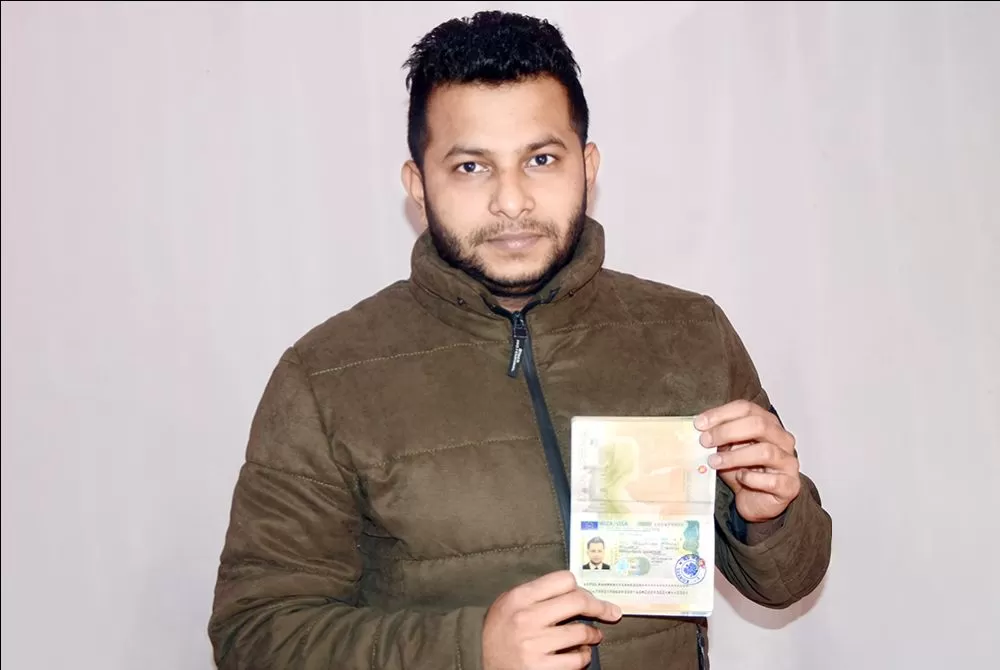
A foreign national who needs a long-stay visa for Serbia applies for a visa D with the purpose of stay marked as seasonal work (viza D, svrha boravka: sezonski poslovi). This visa is the practical form of the seasonal work permit for workers from outside Serbia.
Documents for the seasonal work visa
The official page lists the following documents:
- a completed visa application form, either online or printed if you apply at a diplomatic or consular mission;
- a valid passport that remains valid for at least 90 days after your planned departure from Serbia, has at least two consecutive blank pages, and was issued within the previous ten years;
- a photograph of the applicant;
- proof that the visa fee has been paid, when applying at a mission (online applicants pay at the final step of the application);
- a letter of invitation issued in line with the Law on Foreigners;
- the employer's registration extract showing active status, no older than six months, or an equivalent document;
- a job offer for seasonal work that sets out the employer's details, the place and conditions of work, the expected duration of the engagement (no more than 120 working days in a calendar year), the pay and the rest periods;
- the employer's confirmation of the accommodation address and conditions, meals and other arrangements.
The consular mission may ask for additional documents. The official page does not state the fee amount, so check it with the mission or in the online application before paying.
How to apply online or at a consulate
Applications can be submitted electronically through the online visa application service or in person at a Serbian embassy or consulate. The Ministry of Foreign Affairs visa requirements page explains that online applications need a registered electronic identity account. The diplomatic or consular mission decides on the application.
The employer provides the invitation, the registration extract, the job offer, and the accommodation confirmation, so agree in advance who prepares which document and who pays which costs.
Who can work without a unified permit?t
The official guidance states that foreigners in Serbia on a short stay, on a visa C or visa D issued for seasonal work, or on a temporary residence granted based on seasonal work, can carry out seasonal work without the obligation to obtain the unified permit for residence and work. The exemption is tied to seasonal work in the covered sectors. It does not allow the same person to take an ordinary job in a shop, a hotel, or a factory.
The reference to a short stay is worded generally on the official page. If you plan to rely on it, for example because your nationality can enter Serbia without a visa, confirm with the Serbian mission or the Ministry of the Interior (Ministarstvo unutrašnjih poslova, MUP) that your entry status covers seasonal work before you start, and make sure the employer registers you with the Tax Administration.
Seasonal jobs outside agriculture, such as hotels, tourism,m and construction
Summer coastal and lake tourism, ski resorts in winter, festivals, events and construction all have seasonal peaks. None of them is covered by the simplified seasonal regime under the official guidance. A foreign national taking one of these jobs needs the same authorisation as any other foreign employee, even if the contract only lasts for the season.
Visa D for employment for shorter engagements
The Government's page on residence and work permits explains that a visa D issued based on employment allows residence and work for up to 180 days. It is needed by nationals of countries under the visa regime, and also by nationals of visa-exempt countries whose work engagement is shorter than 180 days. For a seasonal job of a few months outside agriculture, this is therefore the usual starting point.
The visa D for employment can be requested on one of several grounds, the most relevant for seasonal staff being employment under an employment contract or another contract under the Labour Law. Typical documents include a signed proposal of the employment contract, the employer's registration certificate, an excerpt from the employer's rulebook or a statement describing the job, and proof of qualifications with a certified translation where required, together with the general visa documents such as the passport, photograph, invitation letter and confirmation of the residential address.
Unified permit, jedinstvena dozvola, for longer stays
If the work will continue beyond the period that a visa D covers, or if the worker plans to return to the same employer for longer periods, the route is the unified permit for temporary residence and work. According to the official information on the unified permit, the application can be made by the worker, by the employer on the worker's behalf, or by an authorised person; a decision is made within 15 days of a complete application, and temporary residence can be granted for up to three years depending on the grounds and evidence. The permit is issued as a biometric document by the Ministry of the Interior. Applications for the unified permit are made online through the online service for temporary residence, which is linked from the eUprava portal.
A unified permit becomes relevant when a seasonal job turns into a longer contract. Our separate guide on applying for a unified permit covers the procedure, documents, validity, and renewal.
The labour market test by the NSZ
For employment under an employment contract, the employer generally has to start a labour market test (test tržišta rada) with the NSZ. The National Employment Service guidance on employing foreigners explains that the employer submits a notification of the need for employment (prijava potrebe za zapošljavanjem, the PPZ form), either at the same time as the unified permit application through the portal for foreigners, through eUprava no earlier than 60 days before the application and no later than the day it is filed, or at an NSZ branch. The NSZ checks its register for suitable candidates,s and the system generates an identification number that is entered in the unified permit application. The NSZ guidance states that the labour market test report is issued within four days of the PPZ submission.
For a seasonal hotel or construction worker, this means the employer cannot simply sign you up on the day you arrive. It has to be planned, and the authorisation must be in place before you start.
Visa-free stays and the 90-day rule
Many nationalities can enter Serbia without a visa for short stays, and the Ministry of Foreign Affairs explains that a visa C allows stays of up to 90 days in any 180 days. Neither status is, by itself, permission to take a seasonal job outside the simplified agricultural regime.
The official guidance on residence and work lists the activities that may be carried out without a work permit when the stay does not exceed 90 days in 180 days, counted from first entry. They cover company owners and representatives who are not employed by the company, business meetings without income earned in Serbia, lecturers and researchers, temporary educational, sporting, artistic and cultural activities, posted workers who supply, install or repair machinery or equipment, and exhibitors at trade fairs.
Waiting tables, cleaning hotel rooms, working as a lifeguard or labouring on a building site are not on this list. A worker who arrives visa-free and starts such a job without a visa D for employment, a unified permit or another legal basis is working unlawfully, even if the job lasts only a few weeks.
The Ministry of Foreign Affairs also notes that a visa C does not by itself entitle the holder to apply for temporary residence unless the law provides otherwise, and that Serbia has introduced digital travel authorisations for nationals of certain countries. Check your own entry status on the ministry's visa pages before you travel.
EU citizens and seasonal work in Serbia
EU citizens are often surprised that they need any authorisation at all. Because Serbia is outside the EU, the free movement of workers does not extend to it. An EU national can usually visit visa-free, but a seasonal job outside the agricultural regime still requires a work authorisation, and the official guidance specifically says that nationals of visa-exempt countries need a visa D for employment for work engagements shorter than 180 days.
For seasonal farm work, an EU citizen follows the same simplified rules as other foreigners. If you are unsure whether visa-free entry is enough or whether you need a seasonal visa D, ask the Serbian embassy or consulate before you sign anything.
Citizens of Albania and North Macedonia under Open Balkan
There is one important exception to the general rules. The NSZ explains that Serbia applies the Open Balkan agreement on conditions for free access to the labour market with Albania and North Macedonia. Citizens of those two countries can request an Open Balkan identification number through the eGovernment service of their own country, either before entering Serbia or within 90 days after entry. Once registration is approved, they can be employed in Serbia without a work permit or residence permit and are exempt from the related national fees, with residence possible for up to two years and re-registration available if the conditions are still met.
For a seasonal worker from Albania or North Macedonia, this can be simpler than either the seasonal visa or a unified permit. It does not give access to state employment incentives unless the parties agree otherwise, and if registration is refused, the ordinary Serbian rules apply. The employer still has to meet its obligations under labour and tax law.
Arriving, registering your address and starting work
A visa or permit is only the first step. Once you arrive, several practical obligations follow.
Registration of stay
Foreigners' residence in Serbia must be registered with the competent authority. The official page on registration on arrival explains that legal and natural persons providing paid accommodation to foreigners, and people hosting foreigners, must register them within 24 hours of providing accommodation or of the visitor's arrival. Accommodation providers use the eTurista application, and hosts can also register through eUprava. Where the employer provides accommodation, ask who will register you and keep a copy of the confirmation.
Contract, pay and working conditions for seasonal workers
The documents required for the seasonal visa give a useful checklist for judging any offer, whatever the sector.
What the job offer should state
- the full name and registration details of the employer, not just of an intermediary;
- the exact place of work and the type of tasks;
- the expected duration, which for agricultural seasonal work cannot exceed 120 working days in the calendar year;
- the pay, stated clearly as gross or net and as an hourly, daily or monthly amount, with the payment schedule;
- working time and rest periods;
- accommodation, meals and any deductions or charges for them.
If the offer is vague on pay, ask for the figure in writing and ask whether it is gross or net. Under the simplified seasonal regime the law itself regulates how tax and contributions are paid, so a written statement of the net amount you will actually receive is the most useful figure. For ordinary employment, salary is normally agreed as a gross figure from which tax and contributions are deducted.
Equal treatment and social insurance
The official page on employer obligations states that a lawfully employed foreigner has the same rights and duties in work and employment as a Serbian citizen, provided the legal conditions are met, and that a foreigner who concludes a contract with a Serbian employer is covered by compulsory social insurance. The employer must keep evidence that the foreigner meets the conditions for employment and must not employ or use the work of a foreigner who is staying unlawfully or does not meet those conditions.
Health and safety
The employer is responsible for health and safety at work, and the official answers to frequent questions confirm that a Serbian company must apply all health and safety measures regardless of how long a foreign worker stays. Ask about protective equipment, water,r and rest in hot weather before you start.
Not all temporary work in Serbia is seasonal.
Serbian law distinguishes clearly between seasonal work and other forms of short or temporary work, and the distinction has consequences for foreign workers.
- Seasonal work in the legal sense is limited to the covered activities in agriculture, forestry and fishing under the simplified seasonal law, with the 120 working day ca
- Fixed-term employment under the Labour Law (ugovor o radu na određeno vreme) is an ordinary employment contract with an end date. A foreign national on such a contract needs a visa D for employment or a unified permit.
- Temporary and occasional work contracts (ugovor o obavljanju privremenih i povremenih poslova) and other contracts under the Labour Law that do not create an employment relationship are also recognised. The official guidance on employer obligations confirms that a foreigner may be engaged under a contract that does not create an employment relationship, but the foreigner still needs a lawful basis to work in Serbia.
- Agency work through a temporary employment agency is a separate arrangement. The official answers to frequent questions explain that in this case the foreigner's employment relationship is with the agency, so the agency starts the labour market test. Agencies and intermediaries should not be confused with the employer that engages seasonal workers under the simplified regime.
The word seasonal on a job advert does not decide which permit you need. The sector, the contract and the duration do.
Changing jobs, overstaying and other risks
Moving to another employer during the season
Under the simplified seasonal regime, each engagement is registered by a specific employer and the 120 working day cap applies per employer. Moving to a different farm requires that farm to register you itself, and your visa or entry status must still cover the work. On a unified permit, the NSZ explains that changing employer, working for two or more employers,s or changing the basis of work during the permit's validity requires consent from the NSZ. Our separate guide on changing employers on a unified permit covers that procedure.
When the job ends early
The NSZ guidance states that after an employment contract or other work-related contract ends, a foreigner has 30 days to conclude a new one, after which the rules on entry, stay and return of foreigners apply. A seasonal visa or visa D is also limited by its own validity. Our separate guide on job loss on a unified permit explains the consequences in more detail.
Overstaying and undeclared work
Staying beyond the period your visa, visa-free entry or permit allows, or working without the right basis, can lead to fines, removal from Serbia and refusal of future visas or permits. The employer faces penalties for employing a foreigner without the required authorisation. The official answers to frequent questions also note that a renewal of temporary residence or the unified permit can be refused if the earlier stay was not used for the purpose for which it was granted, so working in a different job from the one your permit covers can damage your chances later.
If you face unpaid wages, confiscated documents, or unsafe accommodation, contact the labour inspectorate, the police,e or your own embassy, and keep copies of your documents and job offer. Step-by-stepp checklist for seasonal workers in Serbia
- Identify the sector. Agriculture, forestry, or fishing on genuinely seasonal tasks points to the simplified regime. Anything else points to a visa D for employment or a unified permit.
- Check your nationality. Find out whether you need a visa to enter Serbia, and whether you are a citizen of Albania or North Macedonia eligible for Open Balkan access.
- Verify the employer. Ask for the full legal name and registration details, and check that the business exists and is active in the register of the Serbian Business Registers Agency, or that a farm can show its registration.
- Get the offer in writing. It should state the place, tasks, duration, pay (gross or net), rest periods and accommodation, and for seasonal farm work the duration must stay within 120 working days in the calendar year.
- Apply for the correct visa or permit. Use the online visa service or a Serbian embassy or consulate for a visa D for seasonal work or for employment, and the online service for temporary residence for a unified permit.
- Do not start work early. Wait until the visa or permit is issued and, for farm work, until the employer has registered you with the Tax Administration.
- Register your stay. Make sure your accommodation provider or host registers you within 24 hours of arrival.
- Plan your departure or next step. Before your visa or engagement ends, decide whether you will leave Serbia or move to another lawful basis, and apply in good time.
Proposals and changes to watch
The rules on foreigners and work in Serbia have changed substantially in recent periods, with the introduction of the unified permit, the shift to online applications and the opening of Open Balkan labour market access. Proposals to extend simplified seasonal engagement beyond agriculture, for example to tourism or construction, have been discussed publicly, but no such extension to foreign workers is reflected in the official guidance reviewed for this article. Treat any claim that a hotel or building site can use the agricultural seasonal regime with caution until it appears in the law and on official government pages.
Check the current position with the Serbian embassy or consulate, the Ministry of the Interior, the National Employment Service and the Tax Administration before you travel.
Sources and References
- Visa D for seasonal work, Government of Serbia portal for foreigners
- Residence and work permit, Government of Serbia portal for foreigners
- Information on the unified permit, Government of Serbia portal for foreigners
- Visa D for employment, Government of Serbia portal for foreigners
- Employer obligations, Government of Serbia portal for foreigners
- Answers to frequent and complex questions, Government of Serbia portal for foreigners
- Registration on arrival, Government of Serbia portal for foreigners
- Online visa application service, Government of Serbia
- Online service for temporary residence and the unified permit, Government of Serbia
- eUprava portal, Government of Serbia
- Visa requirements, Ministry of Foreign Affairs of Serbia
- Employment of foreigners in Serbia, National Employment Service
- Employment of foreigners under current rules, National Employment Service
- Open Balkan free access to the labour market, National Employment Service
- Law on Foreigners, Legal Information System of Serbia
- Law on Employment of Foreigners, Legal Information System of Serbia
Get Started with M2S Group
How Can We Help You?
Choose the service that matches your needs.
-
Employers
Find qualified workers for your business.
Hire Workers -
Job Seekers
Explore job opportunities across Europe.
Find a Job -
Recruitment Partners
Build a trusted recruitment partnership with us.
Become a Partner
Ready to Start Your Journey to Europe?
Explore work, study, migration, and visa opportunities with Moving2Europe.eu.
Explore Your OptionsDisclaimer
This article provides general information about seasonal work in Serbia and is not legal or immigration advice. Rules differ by nationality, permit type and occupation and can change. Confirm your situation with the competent Serbian authority, such as the Ministry of the Interior, the National Employment Service, the Tax Administration or a Serbian embassy or consulate.