
23rd Oct 2026
Updated on: 23rd Oct 2026
How Seasonal Work Permits Work in Latvia
A seasonal work permit in Latvia is not a separate plastic card. For people from outside the EU, it is a work visa marked for seasonal work, issued after a Latvian employer has registered the vacancy with the State Employment Agency (NVA), received a positive NVA opinion, and had an invitation approved by the Office of Citizenship and Migration Affairs (PMLP). The visa ties you to one employer and one job, and seasonal work can last no more than six months within any 12-month period. Only jobs in sectors that Latvian law treats as seasonal qualify, so a short contract in a warehouse or factory is not automatically seasonal work. Below are the sectors, steps, pay and housing rules, and the limits on extensions and employer changes.
What a seasonal work permit in Latvia actually is
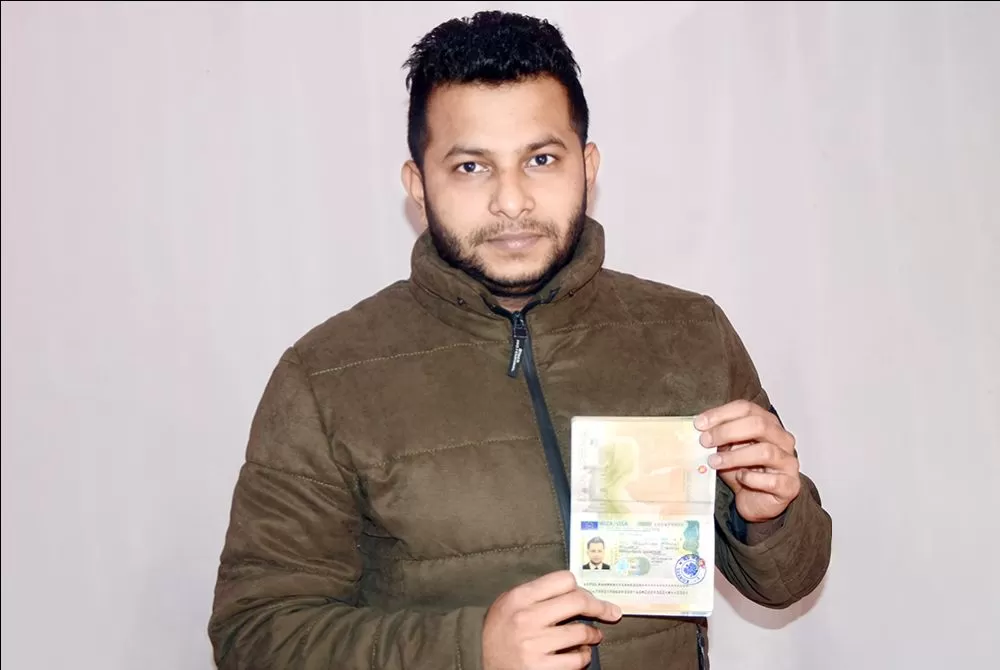
Latvia does not issue a stand-alone document called a seasonal work permit. The right to work is written into your visa. PMLP explains that visas issued for employment carry a remark on the visa sticker showing the type of work right, and one of the remarks is "seasonal work". Other remarks include the right to work with a specific employer and the right to work with no restrictions. When people search for a seasonal work permit, a seasonal work visa, or a darba vīza for sezonas darbs in Latvia, this visa is what they mean.
The legal basis is a combination of EU and Latvian rules. The EU Seasonal Workers Directive sets common minimum standards for third-country nationals who come to an EU country for seasonal jobs, including equal treatment on pay and working conditions and a maximum stay of between five and nine months in any 12 months, with each country choosing its own limit. Latvia has chosen six months. In Latvian law, the Immigration Law and the Cabinet regulation on the employment of foreigners govern who may work and how the right is granted, while a separate Cabinet regulation on seasonal work, issued under the Labour Law, lists the types of work that are seasonal in nature.
Two consequences follow. The permit belongs to a specific job, and because it is a visa rather than a residence permit, it is designed for a stay that ends with the season.
Who needs a seasonal work visa in Latvia?
You need a seasonal work visa, or another valid work authorisation, if you are a third country national. PMLP defines third country nationals as people who are not citizens of an EU member state, an EEA country (Iceland, Liechtenstein and Norway) or Switzerland. Citizens of the EU, the EEA and Switzerland can take seasonal jobs in Latvia without a work visa, although they must follow the rules on registering their residence if they stay for longer periods.
Being visa-free for short tourist trips to the Schengen area does not give you the right to work. A person from a country whose citizens can visit Latvia without a visa still needs a confirmed right to work before starting paid employment. PMLP lists a few exceptions, such as certain guest performers and researchers, but ordinary seasonal work is not among them.
If you already live in Latvia with a residence permit that gives unrestricted labour market access, for example as the family member of a Latvian citizen or as a permanent resident, you do not need a seasonal visa for a seasonal job. Our separate guide on changing employers on a work permit covers which residence titles carry free access to the labour market.
Sectors that count as seasonal work in Latvia
PMLP guidance for employers states that the sectors where seasonal workers may be employed are those set out in the Cabinet regulation on seasonal work. That regulation lists work of a seasonal nature for which a fixed-term employment contract may be concluded under the Labour Law. Its English translation on the official legal acts portal groups the work roughly as follows.
- Agriculture: planting and sowing, care of fields and plantations, preparing feed, establishing pastures and grazing, harvesting and processing farm produce, land improvement, drainage and irrigation work.
- Fish, crayfish, fur and poultry farming: seasonal tasks within the farming cycle, such as preparing ponds, catching farmed stock and maintaining broodstock.
- Fishing and fish processing: fishing in coastal waters, in the Baltic Sea and in inland waters, fish processing and support work for fisheries research.
- Forestry: seed plantations and forest reproductive material, soil preparation for reforestation, forest protection, firefighting and fire watch, forest infrastructure, forest inventory, hunting farms and recreational forest work.
- Land, construction and utilities: landscaping and park clean-up, territory improvement, road building and maintenance, quarrying, peat extraction, trenching for pipes and cables and ground work for communications networks.
- Tourism, hospitality and retail: seasonal shops, cafés, restaurants and tourist accommodation, beaches, campsites and camps, nature tourism sites and seasonal passenger carriers.
- Culture and visitor services: receiving visitors at cultural institutions and tourist information centres open only part of the year, peak season work at cultural sites and protected nature areas, and animal care in animal collections.
- Other: shipbuilding and ship repair using floating docks or quaysides, and boiler room work.
Many entries are tied to timing. A café or campsite counts when it operates only for certain months or a single season, and visitor services count during periods of high attendance. A hotel that operates year-round and simply hires extra staff in summer may not fit the wording, and the decision rests with PMLP when it examines the invitation. You can read the full list in the regulation on seasonal work on the legal acts portal. The Latvian text is the binding one.
Seasonal work and other temporary work in Latvia
The word "seasonal" is often used loosely in job adverts, which is confusing. In Latvian immigration practice, seasonal work means a job in one of the listed sectors whose timing depends on the season. A temporary contract to cover a busy quarter in a logistics centre, a three-month software project or a short stint in a meat processing plant is temporary work, but it is not necessarily seasonal work in the legal sense.
If a job is temporary but not seasonal, the employer can still hire a third country national, but through the ordinary work visa or residence permit route, not the seasonal one. PMLP describes two visa options for employment. A short stay visa covers work of up to 90 days within any 180 days, while a long stay visa can be issued for up to one year. The NVA vacancy rules, pay conditions and invitation procedure are broadly similar, but the remark on the visa, the maximum duration and some of the rights differ. Our separate guide on applying for a work permit explains the ordinary routes, including the temporary residence permit with the right to work.
How long seasonal work in Latvia can last
PMLP states that a long-stay visa for seasonal work may be issued for a period of up to six months within 12 months. The six-month ceiling covers all seasonal work in that window, not each separate contract. If you worked four months as a seasonal worker, you have roughly two months left before the 12-month period resets.
Which visa you receive depends on the planned length of the job. PMLP guidance for seasonal employers says that if employment is planned for more than 90 days, a long-stay visa (type D, a national visa) is requested. If it is planned for 90 days or less, a uniform Schengen visa (type C) is requested. Both carry the seasonal work remark and tie you to the inviting employer.
A long-stay visa also allows short visits elsewhere in the Schengen area, up to 90 days in any 180 days, as Latvian embassies explain, but work is allowed only in Latvia and only for your inviting employer.
The employer steps in before a seasonal worker can apply
As a worker, you cannot start the process on your own. Everything begins with a Latvian employer, and the employer must complete two official stages before you apply for a visa: the NVA vacancy and opinion, then the PMLP invitation.
Registering the vacancy and the NVA opinion
Under amendments to the Cabinet regulation on the employment of foreigners, an employer who wants to hire a third-country national under an employment contract must obtain an NVA opinion that the recruitment is justified. The Ministry of Economics announced these stricter rules for recruiting foreign labour as a measure to protect local job seekers and curb misuse of the immigration system.
The NVA guidance on employing third country nationals sets out the process. The employer registers the vacancy on the NVA CV and vacancy portal and must justify why the vacancy exists and how many places it needs. The NVA checks the advert and publishes it, normally within one working day. The NVA then offers candidates from its records, and the employer must assess them and report the results on the portal by the eighth working day after publication. Within 10 working days of publication, the NVA issues its opinion. It is positive if the employer cooperated, assessed the candidates, and still found no suitable applicant, and negative if the employer did not cooperate or a suitable local candidate was found. NVA guidance also states that the vacancy should remain published on the portal for at least two months from publication.
An employer that receives a negative opinion can challenge it by applying to the NVA Director, and the Director's decision can be appealed in court. A genuine employer cannot skip this stage, so an offer promising a visa "without NVA" deserves suspicion.
Approving the invitation at PMLP
After a positive NVA opinion, the employer has one month to submit an invitation request to PMLP. NVA notes that PMLP can see the opinion in its own system, so the employer does not need to send a copy. PMLP guidance for employers of seasonal workers lists what the employer submits.
- A free-form application with information about the seasonal worker, the planned job and its expected length, and confirmation that the employer has no tax debts.
- A confirmation, if the employer provides housing, that the rent is proportionate to the worker's pay and the housing and will not be automatically deducted from wages.
- The employment contract or a draft of it, showing pay that meets the required level.
- A power of attorney and identity document if a representative submits the request on the employer's behalf.
- Payment of the state fee for each invited seasonal worker.
PMLP guidance states that the invitation is approved within five working days. PMLP also explains that invitation documents can be sent electronically to its official email address, provided the application and each attachment carry a secure electronic signature.
What the employer takes responsibility for
By signing the invitation application, the employer accepts responsibility for making sure your entry and stay match the stated purpose and that you leave Latvia on time. Where necessary, the employer also covers your healthcare, your living costs in Latvia, and your return to your home country. PMLP describes this more broadly for all foreign workers: the employer takes full responsibility for the foreigner's employment and stay, including accommodation and healthcare, and any expulsion costs. Our separate guide on employers hiring foreign workers covers employer duties in more depth.
How the worker applies for a seasonal visa in Latvia
Once PMLP has approved the invitation, you apply for the visa yourself at a Latvian diplomatic or consular mission before you travel to Latvia. PMLP states that the foreigner submits the documents at the competent Latvian representation abroad. The PMLP seasonal guidance lists these documents.
- A valid travel document, normally your passport, recognised in Latvia.
- A completed and signed visa application form.
- One colour photograph measuring 35 by 45 millimetres, taken no more than six months before the application.
- A copy of a valid travel medical insurance policy.
- Proof that the visa fee has been paid.
Your fingerprints are scanned when you apply, in three steps: the four fingers of the right hand, the four fingers of the left hand, a nd then both thumbs. Latvian embassies add their own requirements. For example, the Latvian embassy in the United States explains on its long-stay visa page that a passport should be valid at least three months beyond the visa, with at least two blank pages, and that travel medical insurance must cover the whole Schengen area for the entire stay. Requirements vary between missions, so always follow the page for the embassy where you apply.
The consular officer can ask for further documents and decides whether to issue the visa. An approved invitation does not guarantee a visa. If your visa is refused, the decision explains how to contest it. The EU Immigration Portal notes that a third-country national can challenge a refusal within 30 days and then appeal to the Administrative District Court.
Fees and costs for a Latvian seasonal work visa
There are two official charges in the process. The employer pays a state fee to PMLP for each seasonal worker named in the invitation. You pay the visa application fee when you submit your application. Visa fees are set by Latvian and EU rules, and visa facilitation agreements between the EU and some countries can reduce the amount. Check the current fee on the website of the embassy where you apply, because amounts change and differ between visa types. An external service centre, where one is used, may charge its own service fee on top of the visa fee.
The official fees cover processing only. They do not buy a positive decision, and they are usually not refunded if the visa is refused. No Latvian authority requires you to pay a recruiter for a job offer, an NVA opinion,n or a PMLP invitation. These are the employer's steps. If someone asks you to pay a large sum to "arrange" a seasonal invitation, treat it as a warning sign. Our separate guide on finding a job in Latvia from outside the EU covers checking employers and avoiding recruitment scams.
Pay rules for seasonal workers in Latvia.
Latvia links the pay of foreign workers to official wage statistics rather than to a fixed amount. This matters because the figures change every year when the Central Statistical Bureau publishes new data, so any euro amount you see in an old advert or guide may no longer apply.
The PMLP page on financial means for seasonal work, based on the Cabinet regulation on the financial means foreigners need, sets out how the rule works.
- General rule: monthly pay must be no lower than the average monthly gross wage of employees in the relevant sector according to the most recent Central Statistical Bureau data, or the minimum wage set by a sectoral general agreement where one applies.
- Higher paid sectors: where the sector average is above the national average monthly gross wage for the previous year, the pay must be at least that national average.
- Agriculture, forestry and fisheries: for seasonal work in these sectors, pay must be at least the average gross wage of the sector in the previous year. PMLP publishes separate figures for agriculture, hunting and related services, for forestry and logging, and for fisheries.
These are gross amounts, before income tax and social insurance contributions. Your take-home pay will be lower. The NVA also stresses that the employer must pay a gross wage that matches the relevant sector average from the previous calendar year. Check the current figures on the PMLP page before you accept an offer, and compare them with the pay written in your contract.
The threshold is a condition for the invitation, not a ceiling, and equal treatment means the same pay conditions as Latvian workers doing the same job.
Accommodation rules for seasonal workers
Many seasonal jobs in farming, forestry and fish processing come with housing provided by the employer. Latvian rules do not oblige every employer to offer accommodation, but they control how housing is charged when it is offered. When the employer arranges housing, the invitation application must confirm that the rent will be proportionate and will not be automatically deducted from your wages.
Ask to see the housing cost and how you pay it in writing before you travel, including what the price covers and how many people share a room. A rent that swallows a large part of your pay, or that is taken from your wages without your agreement, is a sign that something is wrong and can be reported to the State Labour Inspectorate.
Your rights as a seasonal worker in Latvia
PMLP publishes an information sheet on the rights and obligations of seasonal workers based on the Seasonal Workers Directive. It says seasonal workers from third countries are entitled to equal treatment with Latvian nationals in several areas.
- Terms of employment, including pay and dismissal, working time, holidays and leave, and health and safety at work.
- Freedom of association, including the right to join a trade union, to strike, to negotiate with the employer and to conclude collective agreements.
- Recovery of unpaid wages owed by the employer.
- Access to goods and services available to the public, except housing.
- Advice on seasonal work from the NVA, as well as access to education, vocational training and recognition of qualifications.
- Where you meet the conditions, state social insurance benefits such as sickness benefit.
Your employment contract must be a written fixed-term contract under the Labour Law, which allows fixed-term contracts for the types of seasonal work listed in the Cabinet regulation. Read the contract before signing it. It should show your job title, workplace, working hours, gross pay, and the start and end dates.
The same PMLP sheet lists where to report abuse, forced labour or human trafficking: the State Police on 112 (or 110 for urgent help), the State Labour Inspectorate, including anonymously through its website, and a national 24-hour hotline for victims of trafficking. You can contact the State Labour Inspectorate about unpaid wages, excessive hours or unsafe conditions, whatever your nationality.
Your obligations while working on a seasonal visa
The seasonal visa comes with clear limits, and breaking them can cost you the right to stay. PMLP's information sheet sets out two core obligations.
- Work only for the inviting employer. You may work only for the employer who invited you for seasonal work. Taking a second job, even on weekends, requires its own work right.
- Report changes within three working days. You must notify PMLP within three working days of any change in your position, place of work, or pay. This can be done by post or by email signed with a secure electronic signature.
The Cabinet regulation on the employment of foreigners also allows PMLP to revoke a work right if the visa is annulled or the conditions on which it was granted change. Working in a different job, for a different employer,r or beyond your visa's validity is unlawful employment, and both you and the employer can face consequences. You must also leave Latvia when your visa expires unless you have obtained an extension or another permit. Overstaying can lead to an expulsion order and an entry ban that affects future visa applications across the Schengen area.
Extending a seasonal work visa in Latvia
If your season runs longer than planned, you may be able to extend your stay without leaving the country, but only within the six-month ceiling. PMLP's information sheet explains that a visa issued for less than six months within the past 12 months can be extended in Latvia if two conditions are met.
- Your employment with the same employer continues, or new seasonal employment with another employer is about to begin.
- You submit the application at least three working days before your current visa expires.
If you stay with the employer who originally invited you, you may continue working while the extension is being examined. If you are moving to a new employer, you should not start the new job until the new work right is granted. The EU Immigration Portal page on seasonal work in Latvia confirms that a seasonal visa can be renewed only if the permitted six-month period has not run out.
Changing employer as a seasonal worker
Because the seasonal work right is tied to a specific position and employer, a change of employer is not a formality. The EU Immigration Portal states that a seasonal worker who wants to change employer must apply for another visa. In practice, the new employer must go through the same steps as the first: an NVA opinion where required, an approved PMLP invitation and the pay and housing conditions described above. You then apply for a new visa or a visa extension, and the total time you spend in seasonal work still cannot exceed six months in 12.
The rules for changing employer on a seasonal visa differ from those for holders of residence permits and EU Blue Cards. Our separate guide on changing employers on a work permit explains those routes. If your seasonal job ends early because the employer closes, the harvest fails, or you are dismissed, our separate guide on job loss on a work permit explains the general consequences for your stay.
Family members of seasonal workers
A seasonal visa is meant for a short, single-purpose stay, so Latvia does not offer a family reunification route for seasonal workers in the way it does for some residence permit holders. The EU Immigration Portal states that family members of a seasonal worker may apply for a short stay visa. That visa is for visits only. It does not give a spouse or partner the right to work, and it is limited to 90 days within any 180 days. A family member who wants to work in Latvia would need a separate work right of their own.
Seasonal work and long-term residence in Latvia
Time spent in Latvia as a seasonal worker does not count towards the residence period needed for a long-term or permanent residence permit. The EU Immigration Portal states this explicitly. Even if you return for several seasons in a row, the stays will not add up to a residence history in the legal sense.
If you want to remain in Latvia after a season, you need a different status, such as a temporary residence permit with the right to work offered by an employer for a year-round job. The portal notes that a change of status requires applying for another visa or a residence permit, and the usual employer, pay, and documentary conditions apply from the start. Our separate guide on applying for a work permit explains that process, and our separate guide on Latvian language explains the language requirements that apply to many jobs and to permanent residence.
A step-by-step checklist for seasonal workers
- Confirm the job is seasonal. Check that the work is in one of the sectors listed in the Cabinet regulation on seasonal work, and that the planned length, together with any earlier seasonal work in the past 12 months, is no more than six months.
- Check the employer. A genuine employer registers the vacancy on the NVA CV and vacancy portal. You can search the portal yourself and check the company in the Register of Enterprises.
- Read the contract and housing terms. Make sure the gross monthly pay meets the current PMLP threshold for the sector and that any rent is stated in writing and is not deducted automatically.
- Wait for the approved invitation. The employer receives a positive NVA opinion, then submits the invitation to PMLP within one month. PMLP approves invitations within five working days.
- Apply at a Latvian mission. Book an appointment at the Latvian embassy or consulate responsible for your country, bring the listed documents, pay the visa fee, and give your fingerprints.
- Travel and start work. Enter within your visa validity, register with the State Revenue Service as a taxpayer, as PMLP requires, and keep copies of your contract and payslips.
- Report changes and plan your exit. Notify PMLP of any change in job, workplace or pay within three working days, apply for an extension at least three working days before your visa expires if needed, and leave on time.
Common mistakes to avoid
Several problems come up again and again with seasonal work in Latvia. The first is travelling on a tourist visa or visa-free entry and hoping to arrange work on arrival. This is not allowed, and working without a granted right is unlawful employment. The second is accepting a job described as seasonal that falls outside the listed sectors, which leads to delays or a refused invitation. The third is paying a middleman for an invitation that only the employer can request, and the fourth is ignoring the six-month limit across several contracts.
Another is assuming that a Latvian seasonal visa allows work elsewhere in the Schengen area. It does not. Finally, older guidance from Latvian authorities still circulates online with outdated waiting periods and wage figures. Rely on the current pages from PMLP and the NVA and on the most recent wage thresholds that PMLP publishes.
Where to get official help
For questions about visas, invitations and extensions, contact PMLP or the Latvian embassy where you will apply. For vacancies and the NVA opinion, the NVA and its CV and vacancy portal are the official channels. For problems with pay, working hours, contracts or safety at work, contact the State Labour Inspectorate. PMLP's information sheet also mentions a one-stop agency for foreigners that offers free consultations, but only to third-country nationals who already have the right to reside in Latvia.
Sources and References
- Visa with the right to employment, Office of Citizenship and Migration Affairs
- Guidance for employers of seasonal workers, Office of Citizenship and Migration Affairs
- Rights and obligations of seasonal workers, Office of Citizenship and Migration Affairs
- Financial means for seasonal work, Office of Citizenship and Migration Affairs
- How to recruit a citizen of another country, Office of Citizenship and Migration Affairs
- Employment of third country nationals in Latvia, State Employment Agency
- Stricter requirements for recruiting foreign labour, Ministry of Economics
- Regulations regarding seasonal work, Latvian legal acts portal
- Seasonal worker in Latvia, EU Immigration Portal, European Commission
- Applying for a long-stay visa, Embassy of Latvia in the United States
Get Started with M2S Group
How Can We Help You?
Choose the service that matches your needs.
-
Employers
Find qualified workers for your business.
Hire Workers -
Job Seekers
Explore job opportunities across Europe.
Find a Job -
Recruitment Partners
Build a trusted recruitment partnership with us.
Become a Partner
Ready to Start Your Journey to Europe?
Explore work, study, migration, and visa opportunities with Moving2Europe.eu.
Explore Your OptionsDisclaimer
This article provides general information about seasonal work in Latvia and is not legal or immigration advice. Rules differ by nationality, permit type and occupation and can change. Confirm your situation with the competent Latvian authority, such as the Office of Citizenship and Migration Affairs or the State Employment Agency, before you apply or travel.